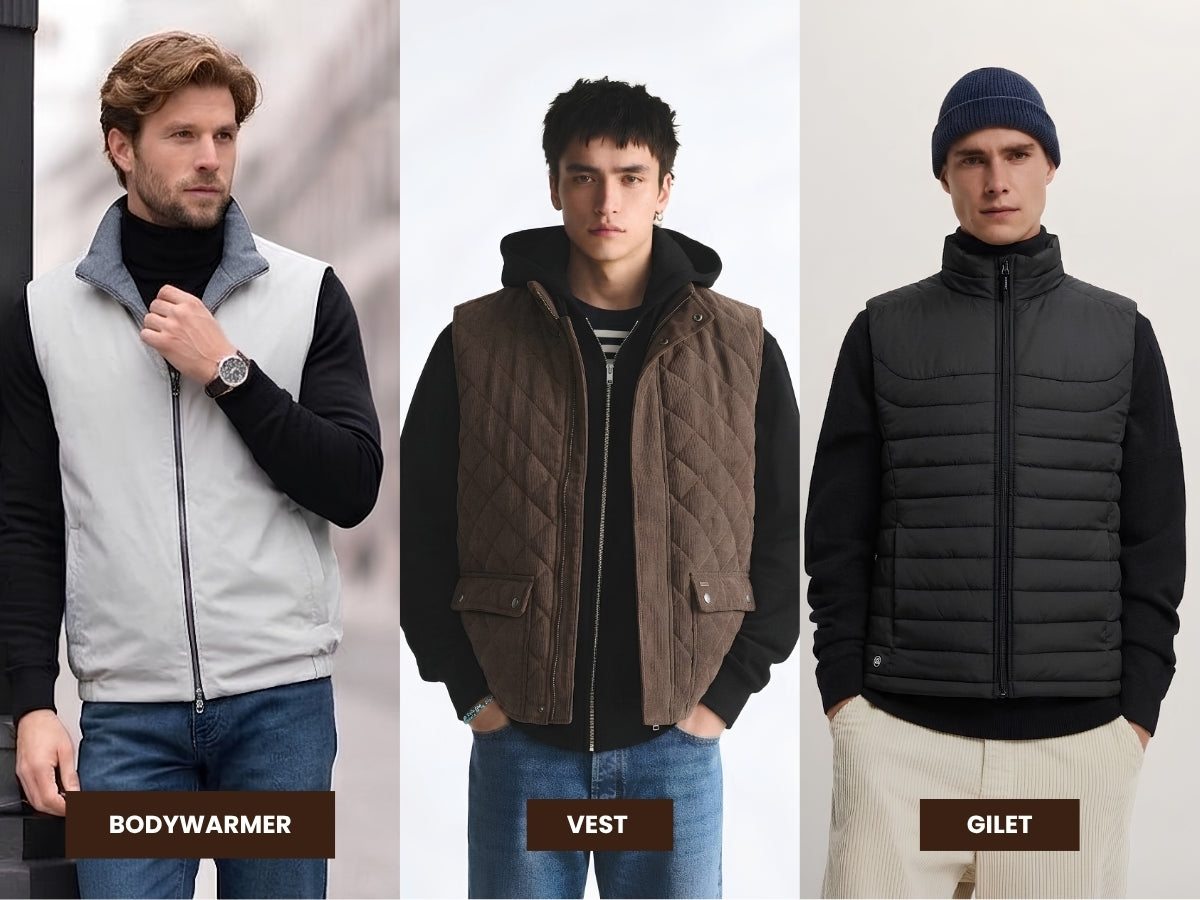
Bodywarmer vs Vest vs Gilet: Are They the Same Thing?
If you've ever browsed for a sleeveless layer online, you've probably come across three names used almost interchangeably: bodywarmer, vest and gilet. It's enough to leave anyone confused. Are they three different garments, or simply three words for the same thing? The short answer in the bodywarmer vs vest vs gilet debate is that they're closely related, but the terms carry subtle differences in meaning, history and usage. Understanding those differences not only helps you shop with confidence, it also means you'll never feel lost when a product is listed under one name in one shop and a completely different name somewhere else. This guide breaks it all down so you know exactly what you're buying and which word to use.
Bodywarmer Meaning: What Exactly Is a Bodywarmer?
Let's start with the bodywarmer meaning, since it's the term most people in the UK reach for. A bodywarmer is a sleeveless, insulated outer layer designed to keep your core warm while leaving your arms completely free to move. The name says it all, it warms the body's centre without the bulk and restriction of full sleeves. That simple idea is exactly what makes it so useful, because it delivers warmth precisely where your body needs it most without limiting your movement.
Bodywarmers are typically quilted or padded, filled with down or synthetic insulation, and worn over a shirt, jumper or base layer. They're a practical, versatile staple for everything from chilly morning commutes to long country walks, and they bridge the gap between seasons beautifully. If you want a deeper look at how they're made, the fills and fabrics to look for, and how to wear them through the year, our complete guide to men's bodywarmers, vests and gilets covers everything in detail.
What Is a Vest?
This is where things get interesting, because "vest" means different things depending on where you are in the world. In British English, a vest traditionally refers to a thin, sleeveless undergarment worn beneath a shirt, much like what Americans would call an undershirt or a tank top. It's a base layer, not an outer layer, and it's worn for comfort and warmth underneath your clothes rather than over them.
In American English, however, "vest" usually means the sleeveless layer worn on top of clothing, which is exactly what a Brit would call a bodywarmer or gilet. So when an American says "puffer vest," they're describing the same padded, sleeveless outer layer that a British shopper would call a bodywarmer. The word is identical; the meaning shifts entirely with geography. This single difference is responsible for a huge amount of the confusion shoppers face, especially when buying from international brands or websites.
What Is a Gilet?
"Gilet" (pronounced zhee-lay) is a French-derived word that has become common in fashion and outdoor circles across the UK and Europe. Like a bodywarmer, a gilet is a sleeveless layer worn over other clothing. The difference is mostly one of tone and style: gilet tends to suggest something a little more tailored, refined or fashion-forward, and it's widely used across both country and smart-casual settings.
You'll often see "gilet" used to describe lighter, sleeker styles, including fleece gilets and slim quilted versions, while "bodywarmer" tends to lean towards the more rugged, heavily padded end of the spectrum. In practice, though, the two words describe the same essential garment. A retailer might choose "gilet" simply because it sounds a touch more premium, even when the product is identical to one another shop happily labels a bodywarmer.
Bodywarmer vs Vest vs Gilet: The Key Differences
So where does all this leave us? Here's the simplest way to understand the vest gilet difference and how the bodywarmer fits into the picture:
Bodywarmer — the most common British term for a padded, sleeveless outer layer built primarily for warmth. It tends to feel practical and rugged, and it's the word you'll see most often in UK menswear.
Gilet — the French-derived term for the same garment, carrying a slightly more refined, fashion-led connotation. It's popular in both outdoor and smart-casual wardrobes and often describes sleeker, lighter designs.
Vest — entirely context-dependent. In the UK it usually means a thin undergarment worn beneath a shirt, while in the US it means the outer sleeveless layer, in other words the bodywarmer or gilet. Always consider who's using the word and where they're from.
The takeaway is straightforward: bodywarmer and gilet are effectively the same thing, just different names for it. "Vest" only joins that same group in American usage, and means something completely different in British English. Everything comes down to region, tradition and a touch of marketing tone, rather than any real difference in the garment itself.
Why So Many Names for One Garment?
The reason for all this overlap is history and language. British, French and American fashion vocabularies developed separately over time, and as styles crossed borders, the names travelled with them, sometimes keeping their original meaning and sometimes shifting it. The flax-to-fashion journey of many garments shows just how much a single item can pick up different labels in different places.
Brands play a significant part too. Some prefer "gilet" because it sounds more elevated and European, while others stick with "bodywarmer" for its plain, honest, practical appeal. Outdoor and country brands often favour bodywarmer, whereas fashion-led labels lean towards gilet. None of them are wrong, they're simply choosing the word that best fits the image they want to project.
For you as a shopper, the practical advice is simple. Don't get hung up on the label on the tag. Focus instead on the fit, the insulation and how the piece works with the rest of your wardrobe, because whatever it happens to be called, the garment is doing the same essential job: keeping your core warm while keeping your arms free.
How to Choose the Right One for You
Now that the naming is clear, choosing comes down to your needs rather than the word printed on the label. Start with warmth: down insulation offers the best warmth-to-weight ratio and a soft, premium feel, while synthetic fills perform better in damp conditions and are easier to care for. Next, think about fit. The ideal sleeveless layer sits close enough to the body to layer neatly under a jacket, yet leaves enough room to wear a jumper or shirt comfortably underneath.
Style matters too. A rugged, heavily padded design suits outdoor and country settings, while a sleeker, more tailored cut works better for smart-casual wear in the city. Finally, lean towards versatile, neutral colours such as navy, charcoal, black and olive, which pair easily with almost anything already in your wardrobe and stretch across far more outfits.
If you'd like a full walkthrough of exactly what to look for before you buy, our guide on how to buy the perfect bodywarmer covers fit, fabric and styling step by step. And when you're ready to compare your options in one place, you can browse the full bodywarmers collection at Pirloni.
Why Choose Pirloni
At Pirloni, we design contemporary men's wear that blends everyday practicality with refined style, and our bodywarmers, or gilets, whichever you prefer to call them, are made with considered fits, quality fabrics and versatile colourways. Whatever the name on the label, Pirloni helps you find a sleeveless layer that performs as well as it looks and slots effortlessly into your existing wardrobe, season after season.
Final Thoughts
In the bodywarmer vs vest vs gilet question, the honest answer is that they largely describe the same garment, separated mostly by language, region and tone rather than by design. A bodywarmer and a gilet are essentially identical, while "vest" depends entirely on which side of the Atlantic you're standing on. Once you stop worrying about the terminology and focus on fit, fabric and function, picking the right sleeveless layer becomes refreshingly simple, and you'll know exactly what you're adding to your wardrobe, no matter what the tag calls it.