How to Buy Quality Knitwear: Complete Buyer's Guide
A good jumper is one of the most useful things you can own. It works under a jacket, over a shirt, or on its own, and it quietly holds an outfit together. The problem is that two knits can look almost identical on the rail and behave completely differently after ten wears. One keeps its shape for years. The other sags at the elbows and pills across the chest by the end of its first season. Buying quality knitwear is really about learning to spot that difference before you pay, not after. This guide walks through the fibres, the construction details and the fit checks that separate a piece worth keeping from one you will quietly stop reaching for, building on our complete guide to men's knitwear.
Start With the Fibre
Everything begins with what the garment is actually made from. The composition label tells you more about how a jumper will age than the price tag does, so it is always the first thing worth reading.
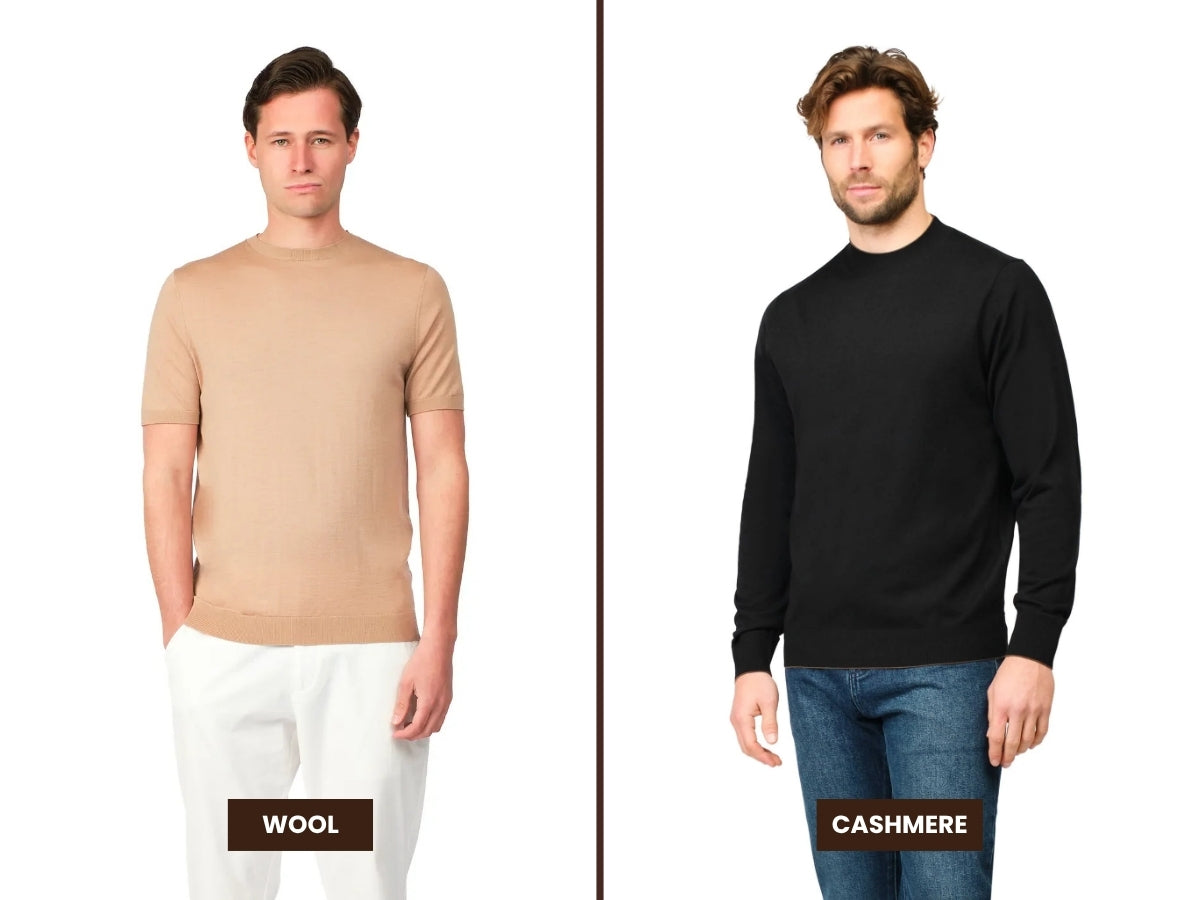
Merino wool is the sensible starting point for most men. It is fine enough to wear against the skin without itching, warm without bulk, breathable, and naturally resistant to odour. It also springs back into shape, which is exactly what you want in a piece you plan to wear weekly.
Cashmere sits at the top end. It is lighter, softer and warmer for its weight than wool, and it feels unmistakably luxurious. It asks for more care in return, but a well-made cashmere piece only improves with age.
Cotton suits milder weather and easy care, though it insulates less and can lose its shape faster than wool.
Blends can be excellent or a warning sign, depending on what is in them. A wool and cashmere blend often gives you the softness of one and the resilience of the other. A knit padded out with a high percentage of acrylic or polyester is usually a cost-saving measure, and it will pill sooner and breathe less.
Look at the Gauge and Weight
Gauge describes how tightly the garment is knitted. Fine-gauge knits are thinner and smoother, ideal for layering under a jacket or wearing somewhere smart. Chunky knits are heavier and more casual, built for cold weather and weekends. Neither is better, but the gauge should match how you actually intend to wear the piece.
Weight matters just as much. Pick the jumper up. A quality knit has a certain density to it, a sense that there is real yarn in your hands. If it feels weightless and flimsy for its size, the maker has likely used less yarn or spun it thinly to cut costs. That thinness is what shows up later as stretching and holes.
Check the Construction
This is where a quality sweater guide earns its keep, because construction is what most people never think to inspect. Turn the garment inside out and spend thirty seconds looking at it properly.
- Seams should be flat, even and secure, with no loose threads or puckering. Fully fashioned knitwear, where panels are knitted to shape rather than cut from a sheet, is a strong sign of quality.
- Ribbing at the cuffs, hem and neckline should feel firm and snap back when you stretch it gently. Slack ribbing on day one will only get worse.
- The neckline should hold its shape and sit flat, not roll or gape.
- Buttons and zips, if present, should be properly secured and feel substantial rather than plasticky.
These small details are exactly where cheaper production cuts corners, and they are the first things to fail.
Get the Fit Right
Even the finest fibre looks wrong in the wrong size, so this is the step to slow down on when you choose sweater styles for your wardrobe. The shoulder seam should sit at the edge of your shoulder, not halfway down your arm. Sleeves should end at the wrist bone, and the hem should finish around your belt line, low enough to cover your waistband but not so long that it bunches.
Through the body, look for enough room to layer a shirt underneath without pulling across the chest. If you can see the knit straining between the ribs, size up. If there is enough spare fabric to gather a fistful at your side, size down. And remember that fit differs by style. A crew neck under a blazer wants to sit close, while a chunky roll neck can afford more room. If you are still weighing up which style suits you, our comparison of the cardigan vs sweater is a useful place to start.
The Pill Test and Other Quick Checks
There are a few fast checks worth doing before you commit. Rub the fabric between your fingers for a few seconds. Quality yarn stays smooth, while poor yarn starts to fuzz almost immediately, which tells you how it will pill after a few wears.
Next, stretch a small section gently and let go. It should return to shape straight away rather than staying loose. Then hold the knit up to the light. You are looking for an even, consistent structure. Thin patches or visible gaps mean inconsistent knitting and a weak point that will give out first.
Finally, read the care label. A garment that demands complicated treatment for a piece you want to wear weekly may not suit your routine, however good it looks in the shop.
Think in Cost Per Wear
The instinct is to compare price tags. The better instinct is to compare cost per wear. A well-made merino jumper worn once a week for five years works out at a few cents per wear. A cheap knit that loses its shape after one winter and gets replaced every year costs far more over the same period, and it never looks as good along the way.
This is why buying quality knitwear is a value decision rather than an indulgent one. Start with two or three excellent pieces in colours you genuinely wear, such as navy, grey, beige or black, and build from there. A small wardrobe of good knits will always outperform a drawer full of average ones.
Caring for What You Buy
Quality knitwear rewards a little maintenance. Fold your jumpers rather than hanging them, so the shoulders keep their shape. Air them between wears and wash less often than you might think. When you do wash, use cool water and a gentle wool detergent, then reshape and dry flat away from direct heat. A fabric comb will lift any pilling and keep the surface looking new. None of this takes long, and it is the difference between a jumper that lasts two years and one that lasts ten.
Final Thoughts
Buying quality knitwear comes down to a handful of habits: read the composition, check the construction, get the fit right, and think in cost per wear rather than price. Do those four things consistently and you will build a knitwear collection that looks better every year rather than worse. Ready to find yours? Explore Pirloni, a Men's Clothing Store built on natural fibres and pieces made to last.