Article: Chinos vs Dress Trousers: When to Wear Each
Chinos vs Dress Trousers: When to Wear Each
Chinos vs dress trousers is a choice between relaxed cotton and tailored cloth. Chinos are cotton twill trousers made for everyday wear, while dress trousers are cut from wool or fine blends with a pressed crease and a sharper line. Both earn a place in a working wardrobe, and both sit comfortably alongside the rest of our men's trousers and chinos. The real skill is knowing which pair the day calls for. This guide explains how each one is made, where each one works and how to style them so you never feel overdressed at a Friday lunch or underdressed at a client meeting.
What Separates Chinos From Dress Trousers?
Chinos are casual trousers made from cotton twill, and dress trousers are tailored trousers made from wool or fine blends, designed to be worn with a jacket.
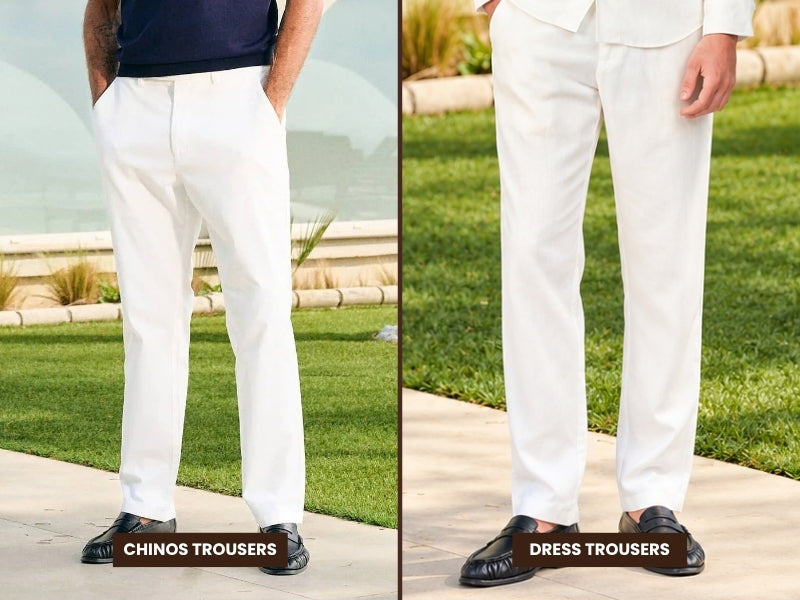
Chinos began as hard-wearing military trousers in khaki cotton and moved into civilian wardrobes because they were comfortable, easy to wash and simple to wear. Most pairs today have a flat front, slanted side pockets, a soft garment-washed finish and, often, a little stretch. They are cut slim or tapered and rarely carry a crease.
Dress trousers come from the tailoring tradition. They usually have a higher rise, a pressed front crease, a cleaner waistband, sometimes with side adjusters instead of belt loops, and a smoother cloth that drapes rather than holds its shape. The result is a longer, more vertical line that sits naturally under a blazer or suit jacket.
The quickest way to see the difference is side by side:
| Feature | Chinos | Dress trousers |
|---|---|---|
| Fabric | Cotton twill, often with stretch | Worsted wool, flannel, wool blends |
| Finish | Matte, soft, sometimes washed | Smooth with a fluid drape |
| Crease | Usually none | Pressed front crease |
| Common colours | Stone, navy, olive, white | Charcoal, grey, navy, black |
| Formality | Casual to smart casual | Business to formal |
| Care | Machine washable | Steam, hang, occasional dry clean |
Chino Formality: How Far Can Chinos Go?
Chino formality describes how dressed up a pair of chinos can look, and it sits between jeans at one end and tailored trousers at the other.
Four things move chinos up or down that scale. Colour comes first: navy, charcoal and dark olive read as smarter than stone or khaki, while white is firmly a summer and weekend choice. Fabric finish matters next, because a tight, smooth twill with a slight sheen looks sharper than a heavily washed or faded pair. Fit is the third factor. A clean taper with little or no break at the shoe looks deliberate, whereas excess fabric bunching at the ankle looks careless.
The fourth factor is what you wear with them. Pair navy chinos with one of our men's shirts in white or pale blue, add a leather belt and suede or leather shoes, and you have an outfit that works in most offices. Swap the shirt for a T-shirt and trainers and the same trousers become weekend wear.
There is a ceiling, though. Chinos are not a substitute for tailored trousers when a dress code says business formal, lounge suit or black tie, and they can look underdressed at interviews in law, finance or other traditional sectors.
Dress Trouser Fabrics and Why They Matter
Dress trouser fabrics are the cloths used to make tailored trousers, most commonly worsted wool, flannel and wool blends, with lightweight wool and linen blends for warmer months.
Worsted wool is the default. It is smooth, hard wearing, holds a crease well and suits most of the year. Flannel is worsted's softer cousin: the fibres are brushed, so the surface feels warmer and looks slightly textured, which makes it a natural fit for Dutch autumns and winters. Wool blends with a small amount of polyester or elastane resist creasing and add stretch, a practical choice if you cycle to work or spend long days seated.
For summer, tropical-weight wool and linen blends keep the tailored shape while letting air through. Cotton gabardine sits close to the line between the two categories; it is tightly woven and smart, but it behaves more like a refined chino than a true dress trouser.
Fabric matters because it decides how a trouser drapes, how long the crease lasts and how formal it reads. As a rule, the finer and smoother the cloth, the more formal the trouser. To keep good wool trousers in shape, hang them by the hem, steam out creases rather than ironing hard, and dry clean only when they actually need it.
When to Wear Chinos
Chinos are the right choice when the dress code is casual to smart casual and comfort matters as much as polish.
They suit relaxed and business casual offices, creative workplaces, weekend lunches, dinners out, first dates, travel days and most summer events. Because they are machine washable and forgiving, they are also the easier option for long days with a lot of movement.
On the most relaxed days, the real decision is often between chinos and denim rather than chinos and tailoring, and our guide to chinos vs jeans covers that choice in detail. As a rule, dark chinos with a collared shirt cover the smarter end of smart casual, and lighter chinos with a polo or knit cover the relaxed end.
Season changes the picture slightly. In spring and summer, lighter weights and paler shades such as stone, sand and white keep an outfit fresh. From October onwards, heavier twills in navy, olive, brown and charcoal sit better with knitwear, overshirts and padded jackets, and they cope with the damp days that define autumn in the Netherlands.
When to Wear Dress Trousers
Dress trousers are the right choice when an occasion calls for business or formal attire, or whenever you plan to wear a blazer or suit jacket.
Reach for them for client meetings, presentations, interviews in corporate sectors, weddings where a full suit is not required, funerals, formal dinners and evenings at the theatre. Odd trousers in charcoal or mid grey also work with a navy blazer when you want to look sharp without wearing a full suit.
This is where the chinos vs dress trousers question has the clearest answer. Once a jacket enters the outfit, the smoother cloth and pressed crease of a dress trouser match the structure of the tailoring, while chinos can look too soft and casual beneath it.
Finish them properly. Leather Derbies, Oxfords or loafers, a belt that matches your shoes, and dark socks keep the line clean. Trainers can work with dress trousers in fashion-led settings, but in a traditional workplace they undo most of the effect.
Smart Trousers for Men: Outfits That Work
Smart trousers for men is a broad term for any trouser that looks considered rather than casual, which includes both well-cut chinos and dress trousers.
These four combinations cover most of a typical week:
- Office to dinner: navy chinos, a white oxford shirt and brown suede shoes.
- Weekend smart: stone chinos, a fine merino crewneck and clean white leather trainers.
- Client meeting: charcoal wool trousers, a pale blue shirt, a navy blazer and dark brown Derbies.
- Autumn smart casual: grey flannel trousers, a jumper layered over a collared shirt and suede Chelsea boots.
Layering is what carries both styles through autumn and winter. A fine-gauge jumper from our men's knitwear range sits neatly over a shirt with either trouser, and a crewneck or zip knit softens dress trousers just enough for a relaxed office.
How to Choose Between the Two
The simplest rule is this: if a jacket is expected, wear dress trousers; if it is not, wear chinos.
Between those two points, think about who you will meet, how long you will be wearing them and how you will get there. A full day of cycling and meetings might favour a wool blend with stretch, while a long lunch followed by drinks suits well-cut chinos. When you genuinely cannot tell, dress one step up: it is easier to remove a jacket or roll your sleeves than to make a casual outfit look sharper once you arrive.
If you are building a wardrobe from scratch, start with one pair of navy chinos and one pair of charcoal wool trousers. Between them they cover almost every occasion, from a Saturday in the city to a Monday morning presentation, and every other pair you add simply widens your options.