Chinos vs Jeans: Which to Wear and When
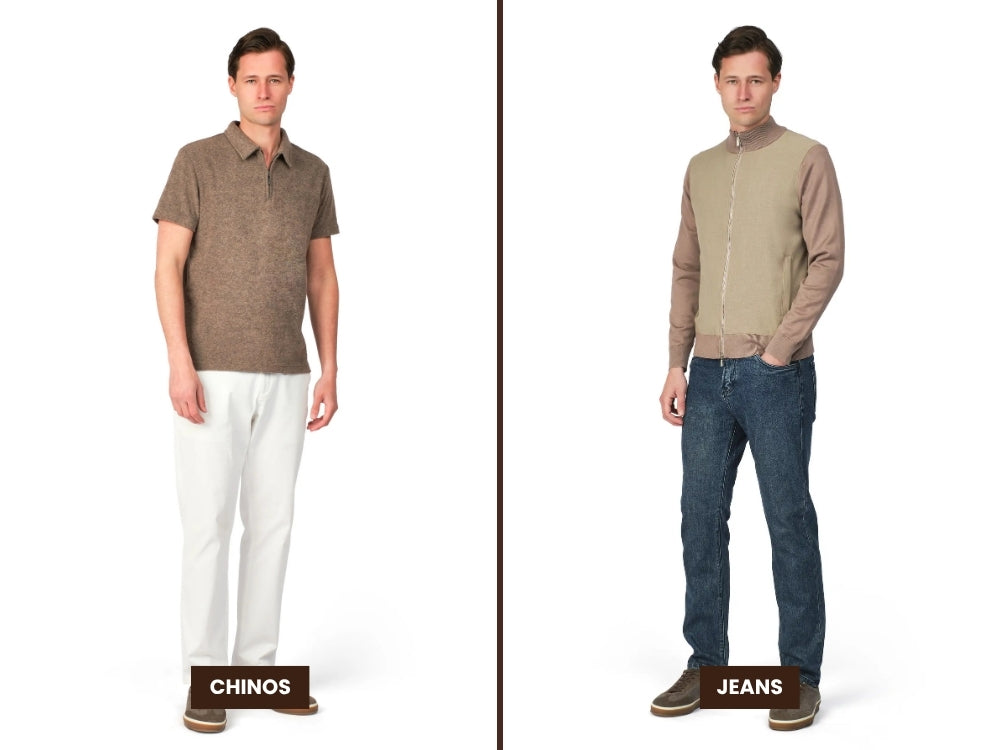
Chinos and jeans solve the same problem, which is what to wear below the waist most days of the week. The difference is tone. Chinos are cut from cotton twill with a flat front and clean slash pockets, so they read as smarter and more considered. Jeans are cut from denim, a heavier and more rigid cotton weave, usually with a five-pocket layout and contrast topstitching, so they read as relaxed and hard-wearing.
If you want one rule, it is this: wear chinos when the setting carries some expectation of effort, and wear jeans when it does not. Below is the full comparison, including fabric, fit, occasion and how to wear white chinos without looking overdressed.
What Separates Chinos From Jeans
The core difference between chinos and jeans is the fabric and the construction built around it. Chinos use a lightweight cotton twill, typically between 200 and 300 gsm, with a diagonal weave that sits flat against the leg. Jeans use denim, usually 10 to 14 oz, with a heavier weave that holds its shape and creases over time.
That single difference drives everything else:
- Pockets. Chinos use slanted or vertical slash pockets that disappear into the seam. Jeans use the five-pocket layout, including the small coin pocket, which is visible by design.
- Stitching. Chino seams are tonal and quiet. Denim stitching is often contrast thread, and it is part of the look.
- Hardware. Chinos rely on a hidden hook or a single button. Jeans carry a branded shank button and rivets at the stress points.
- Ageing. Denim fades at the knees, seat and hems, and most people want it to. Chinos are meant to stay uniform, and visible wear reads as damage rather than character.
Chinos vs Jeans: Fabric, Fit and Feel
Chinos and jeans differ across four measurable properties, and knowing which matters to you settles most of the decision. Use this as a quick reference:
| Property | Chinos | Jeans |
|---|---|---|
| Fabric | Cotton twill, 200 to 300 gsm | Denim, 10 to 14 oz |
| Drape | Fluid, follows the leg | Structured, holds its own shape |
| Breathability | Higher, suits warm weather | Lower, better in cool weather |
| Break-in period | None, comfortable immediately | Several wears, longer for raw denim |
| Formality ceiling | Smart casual and business casual | Casual, smart casual in dark washes |
The practical takeaway is seasonal. Chinos are the better choice from spring through early autumn because twill moves air. Denim earns its place from October onward, when the extra weight is doing something useful.
Are Chinos Smarter Than Jeans?
Yes, chinos are smarter than jeans in most settings, but the gap is narrower than people assume and it closes entirely in the right wash. Formality in trousers comes from three signals: how flat the fabric sits, how little visual noise the construction carries, and how uniform the colour is. Chinos win on all three by default.
Denim can close that gap. A dark indigo or raw wash with no fading, no distressing and tonal stitching sits much closer to a chino than most people expect. What breaks it is contrast: light washes, whiskering, rips and heavy orange topstitching all pull the trouser firmly back into casual territory.
The ranking, from smartest down, runs roughly like this:
- Chinos in navy, stone or grey
- Raw or dark indigo denim with tonal stitching
- Chinos in a bolder colour
- Mid-blue denim
- Light or distressed denim
Our raw denim jeans for men sit at the second tier, which is why they work in offices where a mid-blue pair would not.
Chino or Jeans: Choosing by Occasion
The chino or jeans decision is easiest to make by asking who else will be in the room and what they are likely to wear. Match the room, then adjust half a step upward.
- Office, business casual. Chinos. If your workplace allows denim, keep it to dark indigo or raw and pair it with a collar.
- Client meeting or presentation. Chinos in navy or grey. This is the setting where the fabric difference is most visible under strip lighting.
- Dinner out. Either works. Chinos with fine gauge men's knitwear is the safer combination if you do not know the venue.
- Weekend, daytime. Jeans. This is what denim was built for and the wear it takes only improves it.
- Travel. Chinos for long flights, since twill creases less punishingly and weighs less in a bag. Consider technical alternatives such as men's technical travel trousers for longer journeys.
- Warm weather and holiday. Chinos, and this is where lighter colours earn their place.
The one setting where jeans beat chinos outright is anything involving weather, movement or mess. Denim takes a scuff and shrugs; chinos show it.
White Chinos for Men: When They Work
White chinos for men work in three specific contexts: warm weather, coastal or holiday settings, and evenings where the rest of the outfit is deliberately restrained. Outside those, they draw more attention than most men want from a trouser.
The mistakes are consistent and avoidable:
- Fabric weight. Thin white twill turns transparent in daylight. Look for a heavier cloth or an internal lining through the seat.
- Too much contrast. White chinos with a dark top and dark shoes creates a hard visual break at the waist. Keep the palette within two or three tones.
- Wrong footwear. Black shoes fight white trousers. Tan, brown suede or a clean white trainer all work better.
- Wrong season. White below the waist in November reads as a mistake regardless of how well it fits.
The reliable formula is white chinos, a mid-tone men's linen shirt in stone, sand or soft green, and brown leather or suede on the feet. It photographs well and it holds up from lunch through to the evening.
Building a Rotation With Both
Most men need three or four pairs of trousers in total, not a wardrobe of either one. A workable rotation looks like this: two pairs of chinos in navy and stone, two pairs of jeans in raw or dark indigo plus one mid-blue, and that covers roughly ninety per cent of the year.
Buy the smart end first. A dark pair of jeans and a navy chino between them handle the office, dinner and most weekends. Lighter washes and bolder chino colours are the additions you make once the base is covered, not the pieces you start with.
Both work with the same upper half, which is the point. Browse our men's trousers and jeans collection to see the fits and washes we carry, or start with the men's wardrobe essentials if you are building from scratch.