How to Wear a Matching Set: The Two-Piece Guide
A matching set is a top and a bottom cut from the same fabric and dyed in the same colour, sold or styled as a coordinated pair. It answers the question of what goes with what before you ask it. You put on two pieces and the outfit is already finished.
The two-piece has moved a long way from the tracksuit it borrowed its shape from. Linen versions carry a holiday, technical versions carry a flight, and knit versions carry a cold evening. This guide covers what a set is, how to style one, which fabric suits which occasion, and how to keep both halves ageing at the same rate. Browse the full range of men's matching sets as you read.
What Is a Two Piece Set for Men?
A two piece set for men is a matching top and bottom made from the same fabric in the same colour, worn together as a single outfit. The top is usually a short-sleeve shirt, an overshirt or a lightweight jacket. The bottom is usually shorts or trousers with an elasticated or drawstring waist. You will also see it called a co-ord, which is the shorter term for the same thing.
What separates a set from any two garments that happen to match is the make. Both halves come off the same roll of cloth, so the colour is identical rather than close, and the weight and drape behave the same way on the body. That consistency is why a set reads as considered even when the cut is relaxed.
Most sets fall into three families. Linen and linen blends for heat. Technical fabrics for travel and movement. Knits and terry for evenings and shoulder seasons.
Matching Set vs Suit: What Changes
A suit is structured tailoring built around a canvassed jacket with a defined shoulder; a matching set is unstructured, softer through the shoulder and cut for ease of movement. The difference is construction, not formality alone.
In practice this changes three things. The set has no shoulder padding, so it hangs from your frame rather than shaping it. The waistband is usually elasticated or drawstring rather than a fixed tailored band. And the fabric is chosen for comfort in heat or in transit rather than for holding a press. A set will not stand in for a suit at a black tie event, but it covers a large amount of ground below that.
It is worth separating a set from a tracksuit at the same time, since the shapes look related. A tracksuit is jersey or fleece and cut for sport. A set uses shirting, linen, knit or technical cloth and is cut for everyday wear, which is why it holds up in restaurants and hotels where a tracksuit does not.
How to Style a Matching Set in Four Steps
Styling a matching set comes down to four decisions: fit, tone, footwear and one point of contrast. Get those right and the set does the rest of the work.
1. Fit the top and bottom independently
The most common problem with a set is that one half fits and the other does not. Judge the shoulder seam on the top and the rise on the bottom separately, then buy accordingly. If a set is sold as separates, take the size each piece needs rather than the size the label suggests.
2. Keep the tone consistent from head to toe
A set already commits you to one colour across two garments, so anything you add should sit in the same family. A stone linen set takes a white or bone tee underneath. A navy set takes grey or white. Introducing a third strong colour breaks the line the set is creating.
3. Let footwear set the register
Footwear decides whether a set reads as resort, casual or evening. Leather sandals or suede resort slippers keep it relaxed. A clean white trainer makes it everyday. A loafer or a suede derby moves it towards dinner. The rest of the outfit does not change; the shoe does the talking. See the full men's footwear range for each of those registers.
4. Add one point of contrast, not three
One deliberate break stops a set from looking like a uniform. A woven belt, a watch on a leather strap, a cap or a pair of sunglasses is enough. Adding several at once undoes the calm the set was built for.
Linen Set Men Can Wear Day to Night
A linen set is a matching two piece cut from linen or a linen blend, chosen because the fibre is breathable and dries quickly in heat. It is the warm weather default for a reason: linen moves air rather than trapping it.
The trade-off is creasing. Linen creases when you sit down, and it will crease again five minutes after steaming. That is the fibre behaving normally rather than a fault, and the relaxed cut of a set absorbs it far better than tailoring would. If you want fewer creases, look for a linen blend, which holds its shape more readily than pure linen.
A straightforward build starts with a linen button shirt, worn with matching linen shorts for daytime and matching linen trousers once the sun drops. For evenings that need a layer, a linen jacket in the same cloth sits over the top. Every piece is cut from the same roll, so any combination of the three reads as intentional rather than assembled. You will find all of them in the linen collection.
Colour holds up best in the natural range: white, bone, sand, coffee and olive. These read as intentional in strong daylight, which is where a linen set spends most of its life.
The Tech Set: Built for Travel and Movement
A tech set is a matching two piece made from technical synthetic fabric, typically lightweight, quick drying and resistant to creasing. Where a linen set is built for standing still in the heat, a tech set is built for moving through a day.
This is the set for travel. It comes out of a bag without needing a steam, it handles a change in temperature between an aircraft cabin and an arrivals hall, and a light shower does not end the outfit. Ready-made versions in a nylon blend come as a complete two piece, so the top and bottom are guaranteed to match rather than nearly match.
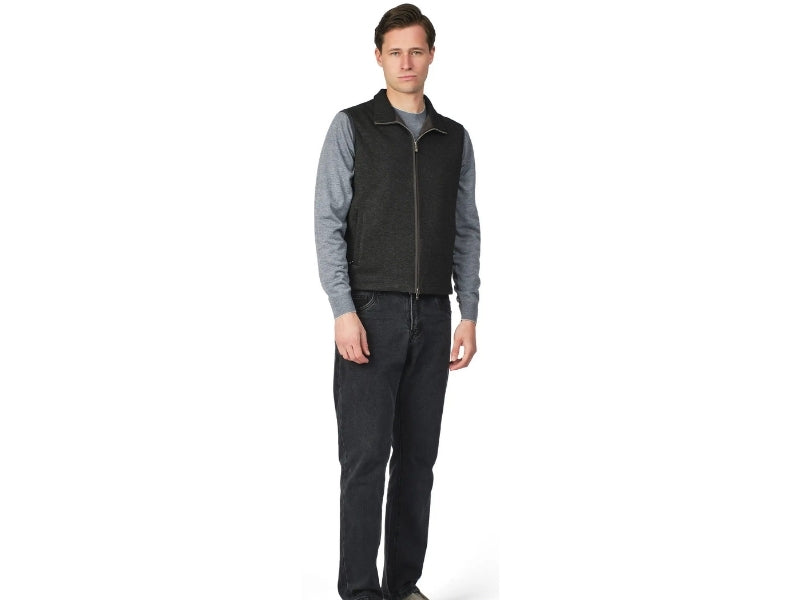
If you would rather build your own, tech trousers and tech shorts pair with a matching layer, and a tech bodywarmer goes over the top when the temperature drops. The wider tech collection covers the separates, and the men's tech suits cover the ready-made sets.
Choosing the Right Colour for Your Set
The most versatile matching set colours are neutrals: sand, stone, white, navy, grey and olive. They carry from a beach club to a dinner table without changing meaning, and they split apart easily into the rest of a wardrobe.
A few practical notes. Lighter neutrals suit strong sun and cooler climates less well, since they can look thin under grey skies. Mid and deep tones such as navy, charcoal and olive read as more formal and travel better into evening. Burgundy and deep green are the safest way to step outside neutrals without the set becoming a costume.
If this is your first set, buy a neutral. If it is your third, that is the point to take a colour.
Where to Wear a Matching Set
A matching set works wherever the dress code sits between casual and smart casual. It is too relaxed for formal business or black tie, and more considered than a tee and shorts.
- Travel days. A tech set in a neutral colour handles a long journey and arrives presentable.
- Holiday and resort. A linen set covers beach, lunch and terrace with only a change of footwear.
- Warm weather dinner. Linen trousers with the matching shirt, a loafer, sleeves rolled once.
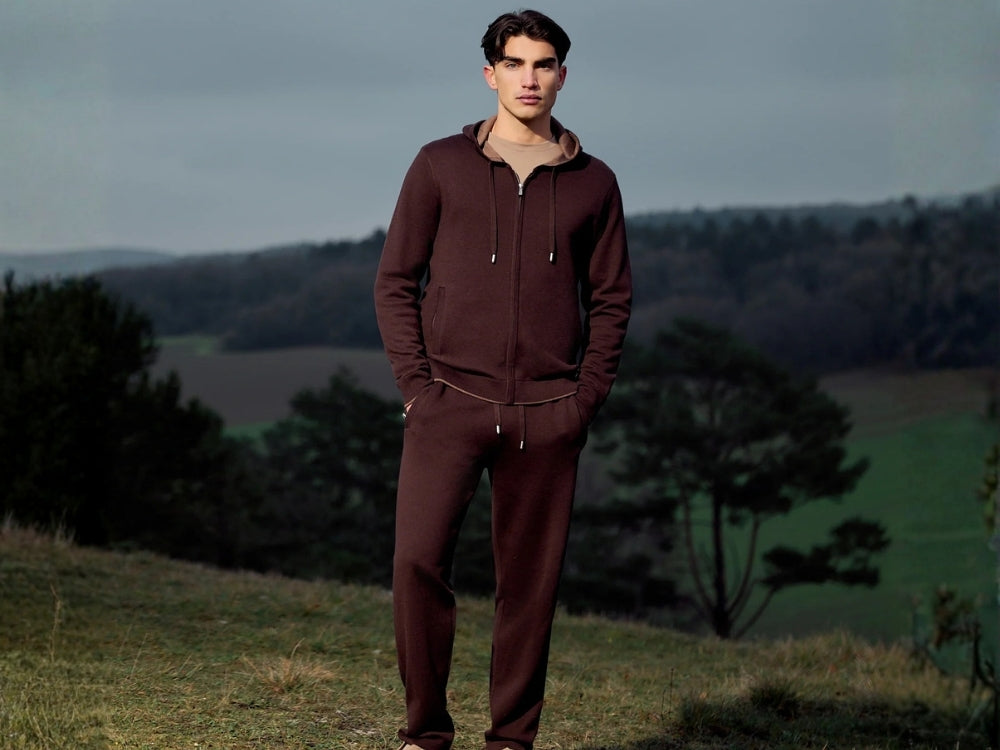
- Weekends at home. A knit or terry set for cooler evenings without reaching for a tracksuit.
- Relaxed offices. A darker set with a leather shoe reads as put together in a creative environment.
- Informal weddings. Only where the invitation states a relaxed or beach dress code. Anything asking for lounge suit means tailoring.
How to Wear the Two Pieces Separately
Every set is also two individual garments, and splitting it is the quickest way to get more wear out of the purchase. A set worn only as a set is two outfits a season; a set worn apart is closer to ten.
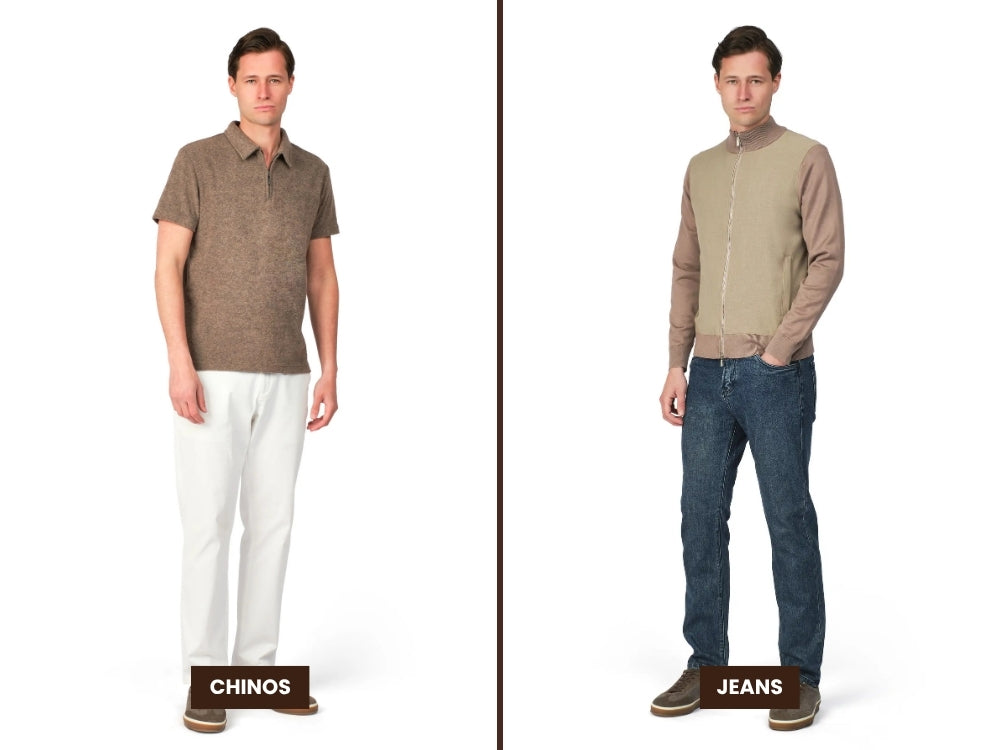
The top usually separates most easily. A linen shirt from a set works over denim or chinos with no adjustment, and our guide to chinos vs jeans covers which of the two suits which occasion. The bottom half pairs with a plain tee, a terry polo, or knitwear as the evenings cool.
In colder months, a fine gauge knit from the men's knitwear range layers under the top half of a set and turns a warm weather two piece into a shoulder season one. A crewneck disappears cleanly under an open shirt; a quarter zip sits better worn on its own with the set trousers.
Fit and Sizing: Getting a Set Right
A matching set should skim the body rather than cling to it, with enough room through the chest and thigh for air to move. A set cut too close loses the ease that makes it a set and starts to look like a suit that went wrong.
- Shoulder seam. On an unstructured top it can sit slightly past the shoulder point. That is intentional, not oversized.
- Sleeve. Short sleeves should end mid bicep. Long sleeves should meet the wrist bone so they roll cleanly.
- Waist. With a drawstring, the fabric should gather gently rather than bunch. Heavy bunching means the size is too large.
- Shorts length. Just above the knee is the most versatile point across occasions.
- Trouser hem. No break or a very slight one keeps the line clean, particularly with sandals or loafers.
Where a set is sold as separates, size each piece on its own merits, since chest and waist rarely sit at the same number on the same person. Where it is sold as a single item, check the size guide against both measurements rather than assuming your usual size.
How to Care for a Two-Piece Set
Wash both halves of a set together on the same cycle so the colour ages at the same rate. Washing one piece more often than the other is the fastest way to end up with two garments that no longer match.
- Wash cold, inside out, on a gentle cycle.
- Skip the tumble dryer. Heat shrinks linen and damages technical coatings.
- Dry flat or on a hanger away from direct sun.
- Steam linen rather than pressing it hard, which flattens the texture.
- Air technical pieces after wear instead of washing every time.
- Always follow the care label on the garment, which takes priority over general guidance.
Mistakes to Avoid With Matching Sets
Most set outfits fail for one of a handful of reasons, and all of them are easy to correct.
- Mixing two near-matching colours. Two similar beiges look like a mistake. Match exactly or contrast clearly.
- Wearing a sports trainer with a linen set. The registers clash. Choose a sandal, loafer or clean minimal trainer.
- Sizing both halves the same by default. Chest and waist rarely sit at the same size on the same person.
- Adding a heavy belt. A drawstring waist does not need one, and it interrupts the vertical line.
- Treating creasing as failure. Linen creases. A set in linen is meant to look lived in by the afternoon.