Article: How Should a Jacket Fit? 6 Points to Check
How Should a Jacket Fit? 6 Points to Check
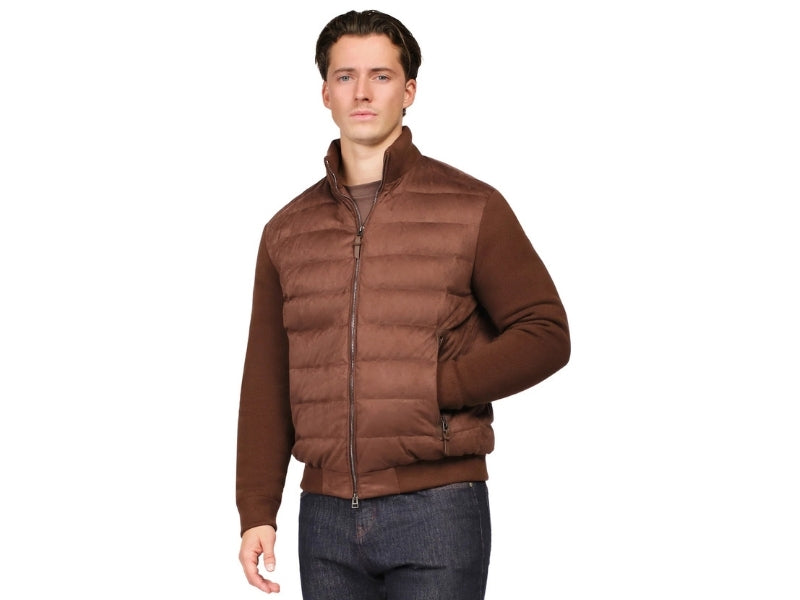
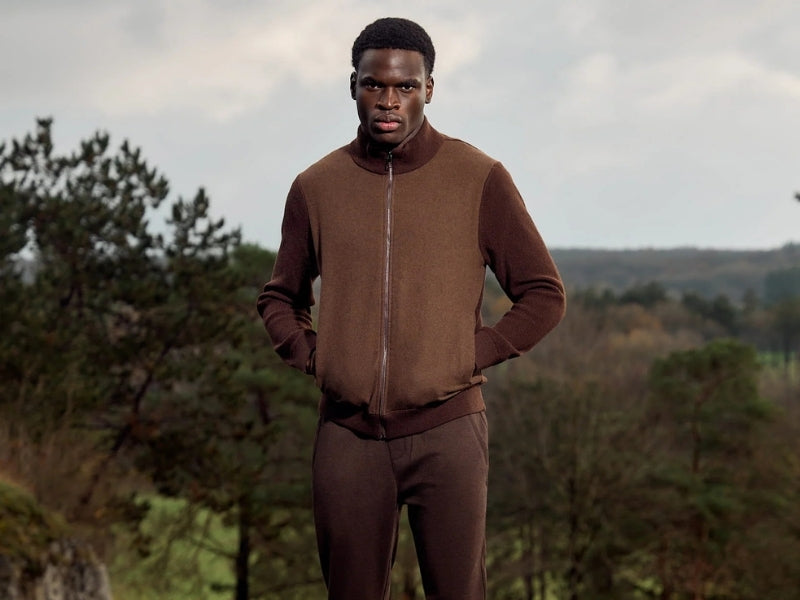
How should a jacket fit? A jacket should sit flat on your shoulders, close across the chest without pulling, finish at the right point on your wrist and let you move your arms freely. When those basics are right, even a simple piece looks considered. Whether you are browsing men's jackets for the season ahead or checking one already hanging in your wardrobe, the six points below will tell you within a few minutes whether it truly fits.
What a Good Jacket Fit Looks Like
A good jacket fit is one where the garment follows the shape of your upper body without clinging to it or hanging off it. The fabric should lie smoothly, the seams should sit where the designer intended, and you should be able to wear it for hours without adjusting it.
A well-fitting jacket makes your shoulders look square and your frame look balanced. Before you judge any jacket, try it on over the layer you would normally wear underneath, stand in front of a full-length mirror and use a second mirror or your phone camera to check the back.
1. Jacket Shoulder Fit: Check This First
Jacket shoulder fit is the alignment between the shoulder seam of the jacket and the natural edge of your shoulder bone. Check it first, because shoulders are the hardest part of a jacket to alter.
- Seam position: on a structured jacket, the shoulder seam should sit on or just beyond the edge of your shoulder bone.
- No dents: if you see a dip or divot in the sleeve just below the seam, the shoulders are too wide.
- No pulling: if the seam sits on top of your shoulder and the fabric pulls towards your neck, the shoulders are too narrow.
- The wall test: lean your shoulder against a wall. If the jacket touches the wall before your arm does, the shoulder is too wide.
Relaxed and drop-shoulder designs are cut differently, with the seam intentionally falling lower on the arm. In those cases, judge the overall drape rather than the exact seam position.
2. Chest and Fastening
Chest fit describes how the front panels of the jacket meet across your torso when it is fastened. Fasten it and stand naturally.
The front should close cleanly and lie flat. On a buttoned jacket, look for an X-shaped crease radiating out from the fastening point. That crease means the chest is too tight. On a zipped jacket, check whether the zip ripples or bows outward. You should be able to slide a flat hand inside the front comfortably, but a clenched fist should feel snug. If the fabric billows when you are standing still, the chest is too large.
3. Jacket Sleeve Length and Cuff Position
Jacket sleeve length is the distance from the shoulder seam to the end of the cuff, and the correct length depends on how the jacket is meant to be worn. As a general rule, the sleeve should finish around your wrist bone when your arms hang naturally.
- Tailored jackets and blazers: allow a small amount of shirt cuff to show beneath the sleeve.
- Casual and outerwear jackets: the sleeve can finish slightly lower, towards the base of your thumb, so it still covers your wrist when you reach forward.
- Movement check: extend both arms in front of you. The cuffs should not ride far up your forearms.
Sleeves that bunch heavily at the wrist are too long, while visible wrist bones at rest mean they are too short. Sleeve length is one of the simpler adjustments a tailor can make.
4. Body Length and Back Drape
Body length is how far the jacket extends down your torso, and back drape is how the fabric falls between your shoulder blades and hem.
Most casual jackets should finish around the top of your hips or just below your belt, covering the waistband of your trousers. Longer styles such as overcoats are cut deliberately longer. Turn around and check the back: the fabric should hang straight, with no horizontal folds under the collar and no pulling across the shoulder blades. A hem that flares out at the back usually points to a jacket that is too tight around the seat or hips.
5. Collar and Neckline
Collar fit refers to how closely the jacket collar sits against the back of your neck. It should rest lightly against your neck or shirt collar without a visible gap.
If the collar stands away from your neck, often called collar gap, the jacket may be cut for a different posture or shoulder shape. If it rides up and presses into your neck, the jacket is likely too small. On hooded or stand-collar styles, check that the collar sits evenly on both sides and that the zip does not rub your chin when fully closed.
6. Movement and Layering Room
Layering room is the extra space inside a jacket that lets you wear a jumper or overshirt underneath without restriction. It is the checkpoint people most often forget.
Always try a jacket on with the thickest layer you plan to wear underneath. If you wear men's knitwear through autumn and winter, bring or wear a similar piece when you shop. Then move: cross your arms, reach forward as if driving, and raise one arm above your head. The jacket should allow all three without the back seam straining or the whole garment lifting off your hips.
Signs a Jacket Is Too Tight
A jacket is too tight when it restricts movement or shows tension lines in the fabric while you are standing still. These are the clearest signs to watch for:
- X-shaped creases around the button or zip
- Pulling across the upper back when you reach forward
- Shoulder seams sitting on top of your shoulders rather than at the edge
- Sleeves tugging at the armholes when you lift your arms
- Pockets that gape open or splay outwards
- A hem that flares or rides up when fastened
If you notice two or more of these, try the next size up. A jacket that feels slightly tight in the fitting room rarely loosens enough with wear to become comfortable, especially in fabrics with little natural stretch.
How Fit Varies by Jacket Style
Fit expectations change with the purpose and cut of the jacket.
Tailored and smart jackets call for the closest fit, with precise shoulders and a clean line through the body. Casual city jackets sit between tailored and relaxed, so they need a neat shoulder but a little more ease through the chest. A reversible wool city jacket is a good example, as both sides need to drape cleanly whichever way you wear it. Technical and outdoor jackets are usually cut with more room for layers and movement, so a slightly roomier fit is intended rather than a mistake.
Your dress code matters too. If you are putting together a smart casual dress code outfit, a jacket with a trimmer fit will look sharper than an oversized one.
The Bottom Line on Jacket Fit
Check the shoulders first, then the chest, sleeves, length, collar and movement. If the shoulders fit well, most other small issues can be fixed or tolerated. If they do not, move on to another size or style. Five minutes with these six points will leave you with a jacket you actually reach for.