Smart Casual Explained: The Dress Code Men Get Wrong
Smart casual for men is a dress code that combines tailored pieces with relaxed ones, so an outfit looks considered without looking formal. It is now the most common dress code in offices, restaurants and weekend events, and it is also the one men misjudge most often. Almost all of the confusion is about how far the relaxed half is allowed to go. The wardrobe that serves smart casual men best is small, plain and built around fit, and this guide sets out what belongs in it, where the line sits, and which mistakes to avoid.
What Is Smart Casual?
Smart casual is a dress code that asks for one tailored or structured element in an outfit that is otherwise relaxed. It sits between business dress and everyday casual, and it has no fixed uniform, which is why the definition shifts between workplaces and venues.
The most reliable test is a swap. Start from a business outfit and remove one formal element, or start from a casual outfit and add one. A blazer over a plain T-shirt with dark denim passes. A suit with running trainers does not, because the suit is still setting the register and the shoes contradict it.
Three factors carry more weight than the individual garments:
- Fit. Clothes that skim the body read as deliberate. Clothes that are loose or tight read as accidental, and no fabric or label corrects that.
- Fabric. Wool, linen, mercerised cotton and knitted textures look considered because they hold a shape and catch light unevenly. Jersey, fleece and technical sportswear sit flat and read as casual.
- Condition. No fading, no bobbling, no scuffed soles. Smart casual is unforgiving about visible wear, since the whole effect rests on looking deliberate.
Smart Casual Dress Code Men Should Know
The smart casual dress code for men works better as a set of boundaries than as a list of required items. Anything inside the boundaries will pass, and the boundaries are easier to remember than a fixed outfit formula.
Inside the dress code
- Tops: collared shirts, polos, fine-gauge knitwear, plain T-shirts in a heavier cotton
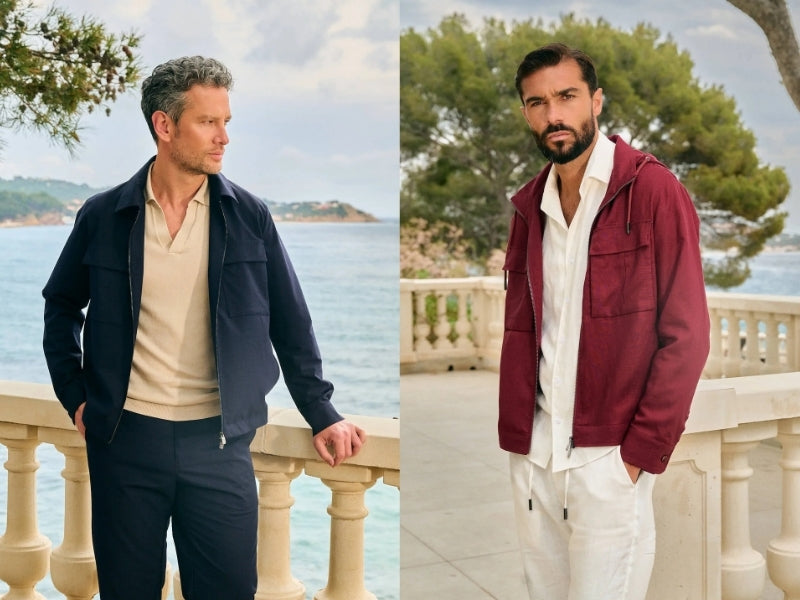
- Layers: unstructured blazers, overshirts, bodywarmers, lightweight jackets
- Bottoms: chinos, wool or cotton trousers, dark denim with no distressing
- Shoes: loafers, derbies, Chelsea boots, clean minimal leather trainers
- Colours: navy, grey, stone, olive, brown, white and black
Outside the dress code
- Graphic prints, large logos and slogans
- Distressed, ripped or light-wash denim
- Running shoes, hoodies and gym shorts
- Anything creased, faded or visibly worn
Colour does quiet work here. A restrained palette makes a plain outfit look intentional, while bright or clashing colours pull attention towards the clothes and away from the fit.
Shorts are the usual grey area. Most smart casual settings exclude them, and the ones that allow them are summer or resort venues that say so on the invitation. If there is no guidance, trousers are the safer answer.
Smart Casual vs Casual: The Difference
Smart casual vs casual comes down to intent. Casual dressing puts comfort first and asks nothing of structure. Smart casual keeps most of that comfort but adds one element that shows a decision was made.
| Element | Casual | Smart casual |
|---|---|---|
| Top | Printed tee, hoodie, sweatshirt | Plain tee, polo, shirt, fine knit |
| Bottom | Joggers, light or ripped jeans | Chinos, wool trousers, dark denim |
| Shoes | Running trainers, sandals | Loafers, derbies, Chelsea boots, minimal leather trainers |
| Layer | None, or a hoodie | Unstructured blazer, overshirt, bodywarmer |
| Fit | Relaxed, comfort first | Considered, close without pulling |
The same pair of dark jeans can appear in both columns. What moves them from one to the other is what goes above and below them. Add a knitted polo and leather loafers and they are smart casual. Add a hoodie and running shoes and they are not.
Where Men Get Smart Casual Wrong
Five mistakes account for most smart casual misfires.
- Confusing it with business casual. Business casual leans formal and expects a shirt and trousers. Smart casual allows a polo or a plain T-shirt. Dressing for the wrong one is the most common misread of the two.
- Adding a blazer to an unchanged casual outfit. A blazer over a hoodie, or over faded jeans and running shoes, does not lift the outfit. It makes the mismatch more obvious. The rest of the outfit has to meet the blazer halfway.
- Ignoring the shoes. Shoes set the register faster than anything else in an outfit. Sports trainers pull the whole look down to casual no matter what sits above them.
- Overcompensating. Three statement pieces at once reads as costume. One structured element is enough, and the rest of the outfit should stay plain.
- Forgetting the details. A creased collar, a belt that fights the shoes or a bag built for the gym will undo an otherwise correct outfit. Smart casual is judged on the whole picture, not the main garments.
Building a Smart Casual Wardrobe
A smart casual wardrobe works when a small number of pieces combine in many directions. Ten to twelve items in a consistent palette will cover most situations the dress code is used for.
- Two or three plain men's shirts in white, light blue or stone, in cotton or linen
- Two polos in a heavier knit or a cotton silk blend
- Two plain T-shirts in mercerised or heavyweight cotton
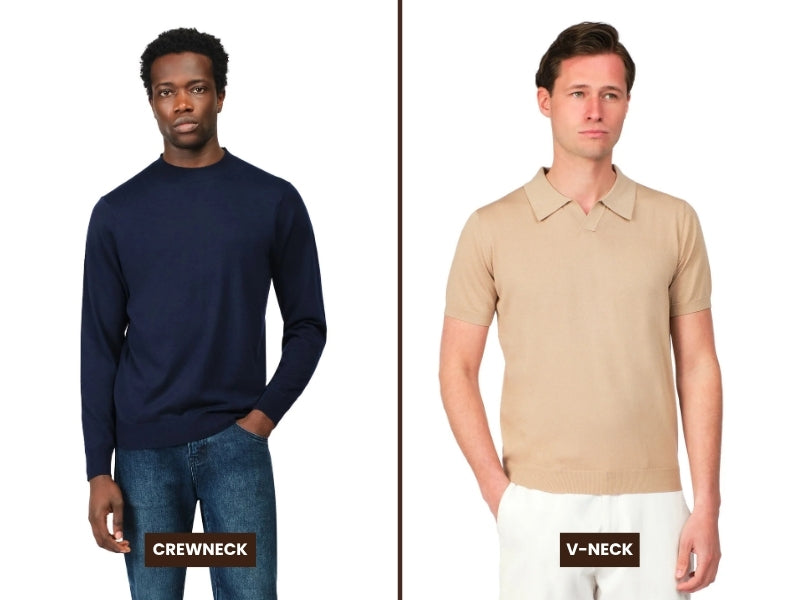
- Two pieces of men's knitwear, one crew neck and one quarter-zip or cardigan
- One unstructured blazer or overshirt
- Two pairs of chinos, plus a dark pair from smart casual trousers and jeans
- Two pairs of shoes, one leather and one clean minimal trainer
Keep the palette to three neutrals and one accent colour. If every top works with every bottom, a ten-piece wardrobe produces more usable outfits than a twenty-piece one that does not coordinate. Buying fewer pieces also makes it easier to justify better fabric, which is what separates a plain outfit that looks considered from one that looks unfinished.
Smart Casual Through the Seasons
Smart casual holds its shape across the year by changing fabric weight rather than changing the formula. The structure stays the same and the materials do the adapting.
In summer, linen and open-weave cotton keep the outfit breathable without losing texture. A short-sleeved knitted polo does the job a shirt does in cooler weather, and unlined trousers replace anything heavy. Loafers worn without visible socks finish it.
In autumn and winter, the layer becomes the structured element. An overshirt, a bodywarmer or a wool blazer over knitwear gives the outfit its shape, and heavier trousers balance the volume on top. Boots take over from loafers, and the palette deepens towards brown, olive and charcoal.
Smart Casual by Occasion
Different settings move the line, so the same wardrobe needs slightly different assembly.
- Office: shirt, chinos, leather shoes, with knitwear or a blazer as the layer
- Dinner: fine-gauge knit or polo, dark trousers, loafers
- Daytime wedding guest: blazer, shirt, tailored trousers, derbies
- Weekend: plain T-shirt, overshirt, dark denim, minimal leather trainers
- Travel: polo, trousers in a fabric that resists creasing, loafers
If the invitation gives no guidance, dress one step above what you assume. Being slightly sharper than the room is rarely noticed. Being noticeably more casual than it is.
Smart casual is less a rulebook than a balance. One structured piece, clothes that fit, fabrics with some texture and shoes in good condition will carry almost any occasion the dress code is used for.