How a Shirt Should Fit: The 7 Fit Points That Matter
Most men buy shirts by collar size and hope the rest works out. It rarely does. A shirt can be the right size on paper and still look wrong on the body, because fit is not one measurement. It is a set of points that each need to sit correctly, and when even one of them is off, the whole shirt reads as either too tight or too loose.
The good news is that once you know where to look, you can judge any shirt in about thirty seconds. This shirt fit guide for men breaks proper shirt fit down into seven checkpoints, so you know exactly what to look for before you buy or keep a shirt. And if you are shopping with the year ahead in mind, our guide to men's shirt trends for 2026 is a useful companion to everything below.
Why proper shirt fit matters more than size
Two men with the same collar size can need completely different shirts. One has broad shoulders and a narrow waist, the other is straight up and down. A single "large" cannot serve both, which is why so many off-the-rack shirts disappoint. Understanding how a shirt should fit lets you spot the difference between a shirt that suits your frame and one that simply matches a number on a label.
Fit also does the quiet work of making everything else look better. A well-fitted shirt makes a plain outfit look considered and makes an expensive one look intentional. Get these seven shirt fitting points right and even a simple white shirt will outperform a designer piece that fits poorly.
The 7 shirt fitting points that matter
1. The shoulder seam
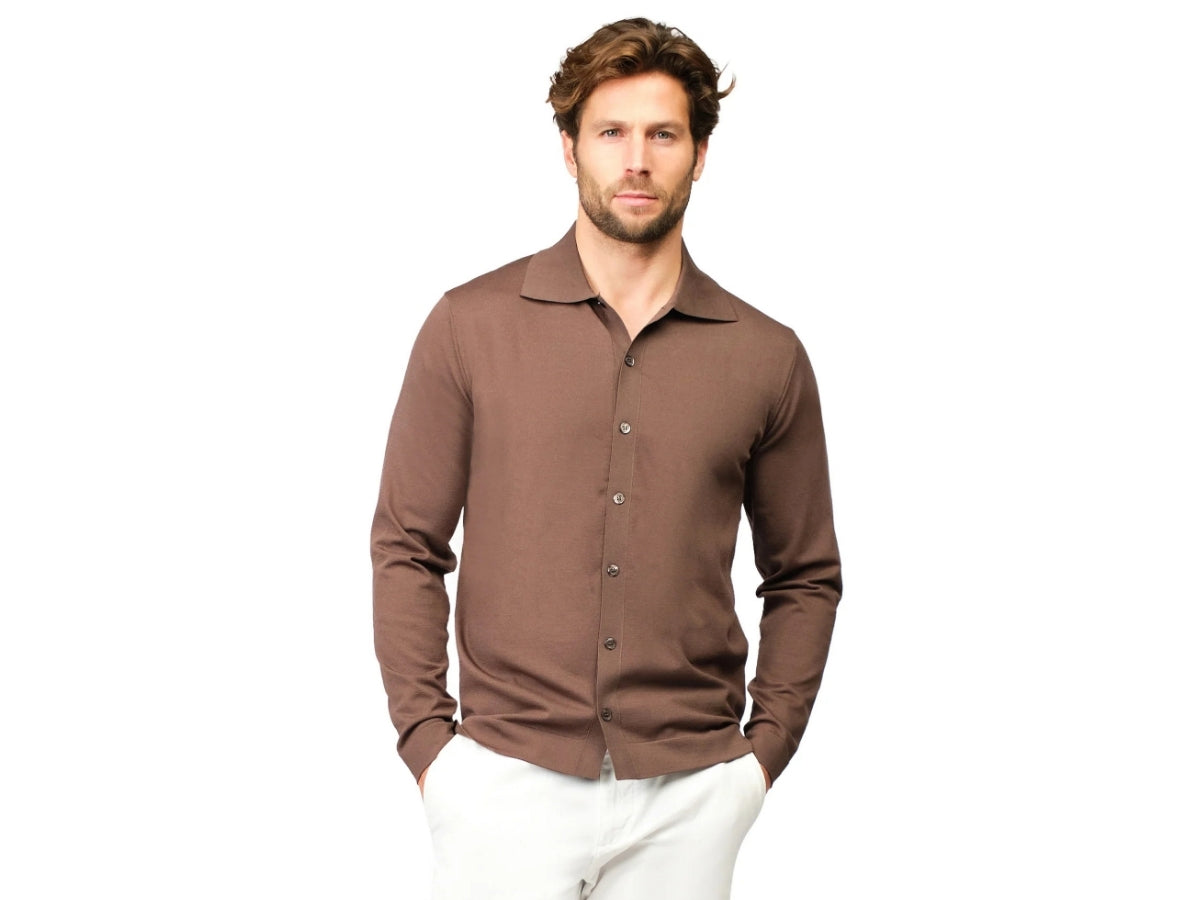
The shoulder is the single most important fit point, and the hardest to alter, so it is where you should start. The seam that joins the sleeve to the body should sit right at the edge of your shoulder, where the flat top of your shoulder turns and begins to slope down into your arm.
If the seam hangs partway down your upper arm, the shirt is too big and will look sloppy no matter what else you do. If it pulls up onto the top of your shoulder and creates tension, the shirt is too small. Because shoulders are difficult and expensive to adjust, always let the shoulder decide the size, then tailor the rest.
2. The collar
A collar should feel present but never tight. The test is simple: once buttoned, you should be able to slide two fingers comfortably between the collar and your neck. Any tighter and you will feel it all day and see it dig in; any looser and the collar gapes, leaving a tie sitting loose or an open neck looking hollow.
The collar also frames your face, so this is not just about comfort. A clean, correctly sized collar is one of the fastest ways to look sharp, which is why it deserves attention every time you try a shirt on.
3. The chest and body
Through the chest and torso, a shirt should follow the shape of your body without gripping it. The classic sign of a chest that is too tight is X-shaped pulling around the buttons, where the fabric strains and small gaps open between them. That means size up or choose a fuller cut.
The opposite problem is just as common. If there is a large balloon of loose fabric that billows when you move or tuck in, the body is too wide. You want a gentle, skimming line that traces your torso with a little room to breathe, and nothing more.
4. The sleeves
Sleeve width matters as much as sleeve length. The sleeve should taper along your arm without squeezing the bicep, and without leaving so much space that the fabric flaps. When your arms hang at your sides, the sleeve should look clean rather than draped.
Fit around the arm becomes especially clear in more structured styles and modern cuts. Sleeve and body proportions are one of the first places a well-made shirt shows its quality, so pay attention to how the fabric sits along the arm rather than just the length.
5. The cuffs
Cuffs are a small detail that give away a lot. A cuff should be snug enough that it does not slide over your hand when your arm is extended, but loose enough to fit a watch underneath without strain. The rough guide is room for one finger between the cuff and your wrist.
This matters most under a jacket, because a correctly sized cuff is what lets a clean line of shirt show past the jacket sleeve. Too loose and the shirt disappears up your arm; too tight and you cannot move comfortably.
6. The shirt length
Length decides whether a shirt stays tucked and whether it works untucked. A dress shirt is cut longer on purpose so it stays put through a day of movement, while a more casual shirt is often cut shorter and straighter so it looks deliberate worn out.
As a benchmark, an untucked casual shirt should end around the middle of your back pocket, covering the seat without hanging down toward your thighs. If you want to understand how length and cut differ between formal and casual shirts, our breakdown of the Oxford versus dress shirt explains when each one is the right call.
7. The overall drape and movement
The final point is not a single measurement but the sum of the other six. Put the shirt on and move. Reach forward, raise your arms, sit down. A well-fitted shirt lets you do all of this without the collar choking, the buttons straining or the whole shirt riding up out of your waistband.
If the shirt looks good standing still but fights you the moment you move, the fit is wrong somewhere. Comfort in motion is the real test of proper shirt fit, because that is how you actually wear it.
How should a shirt fit, in one sentence
A shirt should follow your body with the shoulder seam on the edge of your shoulder, two fingers of room at the collar, a clean skim through the chest, tapered sleeves, snug cuffs and a length matched to how you wear it. Hit those points and the shirt will look right whether you are standing at a desk or moving through your day.
Putting the shirt fit guide into practice
You do not need a tailor to apply any of this. The next time you try a shirt on, run through the seven points in order, starting with the shoulder, because that is the one you cannot fix. If the shoulder is right and only the body or sleeves are loose, a good tailor can take those in for very little. If the shoulder is wrong, put the shirt back.
Once you start judging shirts this way, you stop buying by size alone and start buying by fit. That single shift is what separates men who look sharp in a plain shirt from men who look average in an expensive one.
Explore the full Pirloni men's shirt collection and use these seven points to find the pieces that fit your frame, not just your size.