Article: Merino Wool vs Regular Wool: Which Knitwear Is Better for Men?
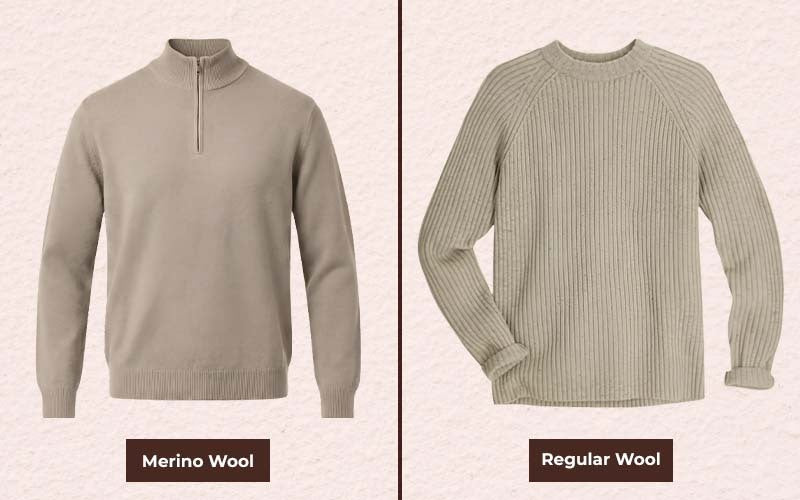
Merino Wool vs Regular Wool: Which Knitwear Is Better for Men?
You are standing in a store, touching two sweaters that look almost identical. One is made from Merino wool, the other from regular wool. The price tags are different. The feeling is different. But which one is actually worth your money?
This is a question more men are asking as they move away from fast fashion and start paying attention to what they wear. If you care about comfort, longevity, and looking sharp throughout the year, understanding the difference between these two materials is one of the smartest things you can do before your next purchase.
In this men's knitwear guide, we break down everything you need to know, from fibre quality to everyday wearability, so you can make a confident, informed choice.
What Is Merino Wool?
Merino wool comes from the Merino sheep, a breed originally from Spain and now raised mainly in Australia and New Zealand. These sheep produce a fibre that is remarkably fine, typically between 15 and 24 microns in diameter. To put that in perspective, a human hair is roughly 70 microns wide.
That fineness is what makes Merino wool so special. The ultra-thin fibres bend easily against the skin rather than scratching it, which gives the fabric its signature softness. It is a natural material that has been valued for centuries, and modern processing techniques have made it even more refined and consistent.
Key Merino Wool Benefits at a Glance
-
Exceptionally soft against the skin, even for men with sensitive skin
-
Naturally temperature-regulating, keeping you warm in cold weather and cool in mild conditions
-
Moisture-wicking, drawing sweat away from the body so you stay dry and comfortable
-
Naturally odour-resistant, making it ideal for longer wear between washes
-
Lightweight yet genuinely warm, so garments feel elegant rather than heavy
-
Biodegradable and a sustainable choice when sourced responsibly
What Is Regular Wool?
Regular wool, sometimes called standard or lamb's wool, comes from a wider range of sheep breeds. The fibres are coarser, typically ranging from 25 to 40 microns, which makes the fabric noticeably thicker and more textured.
This type of wool has been used in clothing for thousands of years. It is durable, widely available, and often more affordable than Merino. You will find it in traditional jumpers, chunky knits, and outdoor workwear. It does an excellent job of keeping you warm in cold conditions, and many men appreciate its classic, rustic look.
However, the coarser fibres are also what give regular wool its well-known drawback: that familiar scratchy feeling against the skin, especially around the neck and wrists. For some men, this is a minor inconvenience. For others, it is a reason to avoid wool altogether.
Merino Wool vs Regular Wool: The Key Differences
When comparing these two materials side by side, four areas matter most for everyday wear: comfort, warmth, breathability, and durability.
Comfort
Merino wool is significantly softer and more comfortable to wear directly against the skin. Its fine fibres flex with your movement and cause no irritation. Regular wool, depending on the grade and processing, can feel rough and is often best worn over a base layer rather than directly on the skin.
Warmth
Both materials are naturally insulating, but they work differently. Regular wool is denser and traps more air, which makes it very effective in extreme cold. Merino wool is lighter but equally warm for everyday temperatures. It also adapts to your body temperature, which means it is comfortable across a wider range of weather conditions.
Breathability
This is where Merino wool clearly stands apart. Its moisture-wicking properties allow it to absorb perspiration and release it as vapour, keeping you feeling fresh even when you are active. Regular wool absorbs moisture too, but it tends to hold it, which can feel heavy and uncomfortable over time.
Durability
Regular wool is generally more resistant to pilling and abrasion in the short term due to its thicker fibres. However, high-quality Merino knitwear, particularly when well-constructed, holds its shape and finish exceptionally well over years of use. Proper care makes a significant difference for both types.
Which Is Better for Everyday Wear?
For most men who want knitwear they can actually wear often, whether to the office, out for dinner, or on a relaxed weekend, Merino wool is the stronger choice. It layers beautifully under a blazer, packs well without creasing badly, and does not require washing after every single wear thanks to its natural odour resistance.
If you are looking for the best wool for sweaters that you will reach for again and again throughout the season, Merino offers a level of versatility that regular wool simply cannot match. It looks refined, feels comfortable from the first wear, and adapts to your lifestyle rather than limiting it.
Regular wool remains a great option for specific purposes, such as heavy outdoor knitwear, traditional cable-knit styles, or garments meant for very cold climates where maximum insulation is the priority.
Which Is Better for Dutch Weather?
The Netherlands has a particular climate that most men know well: mild but unpredictable, often grey, frequently windy, and capable of cycling through several seasons in a single day. This is exactly the kind of environment where Merino wool proves its worth.
Because Merino naturally regulates temperature, it performs well during those transitional moments when you move from a heated office to a cold street and back again. It handles light moisture from Dutch drizzle without becoming uncomfortable, and its breathability means you will not overheat indoors despite wearing a proper knit.
Regular wool, on the other hand, can become too warm indoors and is slower to recover from moisture exposure, which in a typically damp Dutch autumn or winter can become an issue. For the Dutch climate and lifestyle, Merino wool is the more practical and comfortable choice for most of the year.
Styling Tips for Knitwear
Knowing how to wear knitwear well is just as important as choosing the right material. Here are some simple principles that work for most occasions.
-
Layer with intention. A slim-fit Merino crewneck under a tailored blazer is a classic combination that works for both smart-casual and business settings. Keep the silhouette clean and avoid bulky layers underneath.
-
Match the weight to the occasion. Lightweight knitwear suits the office and dining settings. Heavier knits work better for outdoor activities or relaxed weekend wear.
-
Keep colours versatile. Neutral tones such as navy, camel, oatmeal, and charcoal are the most wearable. They pair easily with both casual and formal trousers.
-
Tuck or untuck depending on the cut. A well-fitted knit with a clean hem can be left untucked for a modern, relaxed look. If the fit is looser, tucking the front into tailored trousers adds structure.
-
Care for your knitwear properly. Hand wash in cold water or use a delicate machine cycle. Lay flat to dry. Proper care extends the life of any wool garment significantly.
Explore our Knitwear Collection to find styles that work across all of these occasions, from refined office knits to relaxed weekend options.
Why Choose Premium Knitwear from Pirloni
At Pirloni, we believe that the best knitwear is the kind you almost forget you are wearing, until someone asks where you got it. That is the standard we hold ourselves to with every piece we create.
Our knitwear is crafted using carefully selected Merino wool that balances softness, structure, and wearability. We focus on modern fits that work with how men actually dress today, not silhouettes from decades ago. Clean lines, considered proportions, and materials that feel as good on day one as they do a year later.
We also understand that premium knitwear should be an investment that rewards you over time, not a purchase you regret after a few washes. That is why quality sits at the centre of everything we do, from material sourcing through to construction and finishing.
Whether you are building your first quality wardrobe or refining one you have been developing for years, Pirloni knitwear is designed to be a lasting part of it. Browse our Sweaters Collection to find styles made for the modern man.
The Bottom Line
When it comes to Merino wool vs regular wool, both materials have their place. But for the modern man who wants knitwear that is comfortable, versatile, and refined enough to wear across a wide range of occasions, Merino wool is the clear winner.
It handles Dutch weather well, looks polished with minimal effort, and rewards you with comfort every single time you put it on. That is the kind of quality worth investing in.
FAQ's
Is Merino wool worth the higher price?
Can Merino wool be worn in spring and autumn, not just winter?
Does Merino wool shrink in the wash?
What is the difference between regular wool and Merino for sensitive skin?
Last updated: