Article: Overshirt vs Shirt vs Jacket: What to Wear
Overshirt vs Shirt vs Jacket: What to Wear
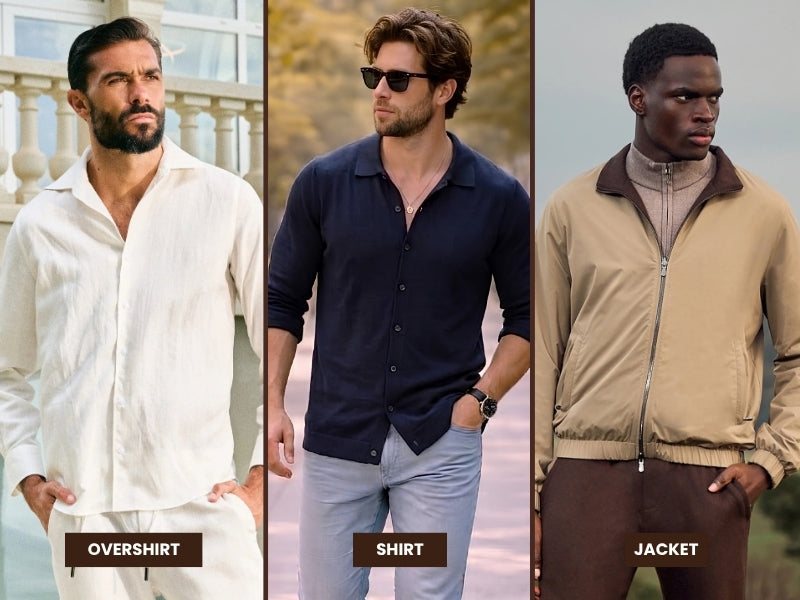
The overshirt vs shirt vs jacket question comes down to weight, fit and purpose. A shirt is a base layer worn close to the body, an overshirt is a heavier mid layer you can wear open or buttoned, and a jacket is outerwear made to keep out wind, rain and cold. Once you know where each piece sits, dressing for changeable weather becomes far simpler, and a small rotation of well cut men's shirts turns into the foundation for everything you layer on top.
This guide explains what separates the three, when each one makes sense and how to combine them, so your outfits work from a mild September morning to a windy January commute.
What Is an Overshirt?
An overshirt is a heavyweight shirt designed to be worn over another layer rather than on its own against the skin. It keeps the collar, button front and cuffs of a shirt but uses thicker cloth such as wool blend, brushed flannel, corduroy, heavy twill or quilted cotton.
Most overshirts have a straighter, slightly roomier cut so a T-shirt, polo or fine knit fits comfortably underneath. Chest pockets are common, and the hem usually sits at the hip so it looks right left untucked. You may also see it called a shirt jacket or shacket, which sums up its role neatly: it looks like a shirt but is worn like a light jacket.
Overshirts are at their best in transitional weather. On a dry spring or autumn day in the Netherlands or Belgium, one can replace a jacket altogether. When the temperature drops further, it becomes a warm mid layer under a coat, giving you one piece that earns its place for a good part of the year.
Shirt vs Overshirt: How They Differ
The main difference between a shirt and an overshirt is fabric weight, which decides whether the piece is a base layer or a layer on top of something else. A regular shirt is lighter, closer fitting and made to be worn next to the skin.
Classic shirt fabrics include poplin, oxford cloth, linen and mercerised cotton. They breathe well, drape close to the body and are cut to be tucked into trousers or worn under a blazer or knit. An overshirt made in the same slim fit would feel stiff and bulky, while a shirt cut like an overshirt would look loose and unfinished.
A quick test helps: if you would happily wear something under a jumper, it is a shirt. If you would wear it instead of a jumper, or over a T-shirt, it is an overshirt. Shirts also cover a wider range of dress codes. A crisp white or light blue shirt works with tailoring and in most offices, while overshirts stay firmly in smart casual territory.
Overshirt vs Jacket: Which Is Warmer?
A jacket is almost always warmer than an overshirt because it is built as protective outerwear rather than as a layering shirt. Jackets typically add a lining, padding, a zip or snap closure, a higher collar and a water repellent or windproof finish.
An overshirt blocks a light breeze and adds some warmth, but it is not designed to shed rain or hold heat for long periods outdoors. That is why it works as a jacket substitute on mild days and as a mid layer in colder months. When wind and drizzle arrive, which happens often in the Low Countries, a proper jacket takes over. Our men's jackets include field jackets, reversible styles and wool options cut to sit over a shirt or overshirt without feeling tight across the shoulders.
Structure is the other big difference. Jackets hold their own shape and are cut with room for layers underneath. Overshirts are softer and follow the body more like a shirt, which makes them comfortable to keep on indoors all day, something few jackets manage.
Overshirt, Shirt and Jacket Compared
The simplest way to compare the three is by layer position: the shirt goes underneath, the overshirt sits in the middle and the jacket goes on the outside.
| Feature | Shirt | Overshirt | Jacket |
|---|---|---|---|
| Layer role | Base layer | Mid layer or light outer layer | Outer layer |
| Fabric weight | Light | Medium to heavy | Heavy or technical |
| Fit | Close to the body | Relaxed, room for a T-shirt | Room for several layers |
| Best weather | Indoors and warm days | Mild, dry days | Wind, rain and cold |
| Worn tucked | Often | Rarely | Never |
| Dress code | Casual to formal | Smart casual | Casual to smart |
How to Wear an Overshirt
The easiest way to wear an overshirt is open over a plain T-shirt or fine knit, with chinos or jeans and clean trainers or boots. That combination covers most casual plans and looks deliberate without trying too hard.
Keep the base layer simple. A white, navy or grey T-shirt lets the texture of the overshirt stand out. A thin merino or cotton knit is the smarter option for dinners or a relaxed office.
Button it for a cleaner line. Worn closed, an overshirt reads almost like a shirt, so it suits days when you want to look a little more put together. Leave the top button undone to keep it relaxed.
Add a bodywarmer on top. On cooler days, a padded gilet over an overshirt adds core warmth while leaving your arms free. Our men's bodywarmers sit neatly over shirt collars and heavier fabrics, which makes them an easy partner for this layer.
Watch the proportions. The overshirt should finish around the hip, and the shoulder seam should sit at your natural shoulder point. Too long and it starts to look like a coat; too short and the layer underneath will show at the hem.
Mix textures, not loud colours. Pair a corduroy or wool overshirt with smooth cotton and denim. Earthy tones such as olive, navy, brown and stone combine easily with almost everything else in a wardrobe.
What to Wear by Season
The right choice between a shirt, an overshirt and a jacket depends mainly on temperature and rain, so it helps to plan by season.
Spring and early autumn. A shirt or T-shirt with an overshirt on top is usually enough. Carry a light jacket if showers are forecast, because an overshirt will not keep you dry for long.
Late autumn. Wear the overshirt as a mid layer under a field jacket or reversible jacket. You can take the outer layer off indoors and still look finished rather than underdressed.
Winter. Build from a shirt, then a knit or overshirt, then an insulated jacket. For practical advice on handling wind and damp cold, read our guide to choosing a men's winter jacket for Dutch weather.
Summer. Skip the overshirt and choose a lightweight linen or cotton shirt worn on its own. A light unlined jacket covers cooler evenings by the water.
Which One Should You Choose?
Choose the layer that matches both the weather and the setting. Pick a shirt for the office, formal plans and warm days. Pick an overshirt when it is mild and dry, or when you want an extra layer you can keep on indoors. Pick a jacket whenever wind, rain or real cold is in the forecast.
In practice, most men get the most from owning all three and wearing them together. A few good shirts, one or two overshirts in versatile colours and a dependable jacket give you enough combinations for almost any day of the year, without a crowded wardrobe.