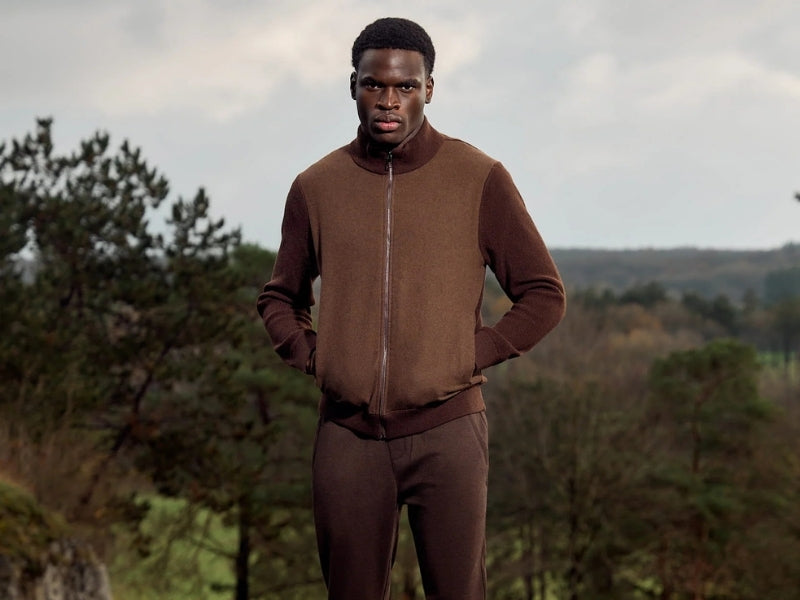
Article: Men's Winter Jacket for Dutch Weather : How to Choose
Men's Winter Jacket for Dutch Weather : How to Choose
Choosing a men's winter jacket for Dutch weather is less about surviving deep cold and more about handling wind, drizzle and temperatures that hover just above freezing for weeks at a time. The right jacket blocks the wind, copes with damp days and keeps you warm without leaving you overheated on the bike or in a warm office. If you are ready to compare styles, our range of men's jackets covers everything from down jackets to reversible city jackets, and this guide will help you decide which one suits your winter.
What Dutch Winter Weather Asks of a Jacket
Dutch winter weather is mild, damp and windy rather than extremely cold. From December to February, daytime temperatures usually sit in the low single figures, frost comes and goes, and rain or drizzle falls on many days. Wind is the factor most people underestimate. On open roads, near the coast and on bridges, it makes a few degrees feel far colder than the forecast suggests.
That gives a winter jacket three clear jobs:
- Block the wind. A tightly woven outer, such as nylon, stops cold air cutting through your layers.
- Handle moisture. An outer that sheds light drizzle keeps the layers underneath dry. For long spells in heavy rain, a dedicated rain layer is still the safer choice.
- Adapt to changing temperatures. Days swing between just below and well above freezing, so pieces you can layer or open up work better than one very heavy coat.
Down Jacket vs Lightweight Jacket for Winter
A down jacket is an insulated jacket filled with down clusters that trap warm air, giving a high level of warmth for its weight. It is the natural choice for the coldest weeks, early commutes and evenings spent outdoors. A lighter technical jacket suits the milder winter days, especially when you wear a knit or bodywarmer underneath.
A down jacket makes sense if you spend long periods outside, walk more than you cycle, or simply feel the cold easily. Styles such as the Knit Sleeve Down Jacket and the Two Tone Down Jacket give you one outer layer that handles near-freezing mornings. You can compare every option in our down jackets for men collection.
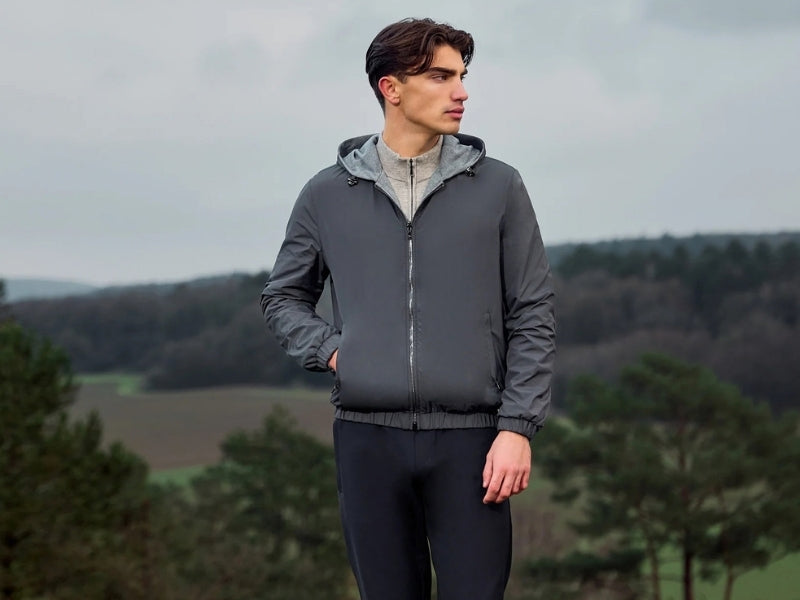
A lighter jacket makes more sense if you cycle, move quickly and warm up fast, or prefer to control your warmth with knitwear underneath. The Hooded Tech Jacket and the Tech Field Jacket are made in technical fabric and sit comfortably over a jumper or merino layer.
Is a Reversible Jacket Good for Winter?
A reversible jacket is a jacket with two fully finished sides, so one piece gives you two looks. For winter, the important detail is what each side is made of. The Reversible Hooded Wool City Jacket combines a 100% nylon side with a wool-blend side, so you can wear the nylon face out on windy or damp days and the softer wool-blend face on dry, cold ones.
It works as an everyday jacket from autumn through the milder winter weeks, and with a knit underneath it handles colder days too. The hood helps in drizzle, while the hoodless Reversible Wool City Jacket gives a cleaner collar for smart-casual outfits. Both come in several colour combinations, which means one jacket can cover a navy look and a brown or grey look. Browse all of our reversible jackets for men to see the full choice of colours.
Bodywarmer vs Jacket: When a Gilet Is Enough
A bodywarmer is a sleeveless insulated layer that keeps your core warm while leaving your arms free. On its own, it suits dry autumn days and mild winter spells. In proper winter weather, it earns its place as a mid-layer under a jacket.
- Bodywarmer on its own: dry days of roughly 8 to 12°C, short trips and active days.
- Bodywarmer under a jacket: cold mornings when you want extra core warmth without switching to a heavier coat.
- Jacket on its own: wet or windy days, or whenever your arms feel the cold.
The Reversible Body Warmer is nylon on both sides, while the Reversible Knit Body Warmer pairs a nylon side with a merino wool side for extra warmth. Explore the full range of men's bodywarmers to find the right layering piece.
Choosing a Winter Jacket for Cycling
A good winter jacket for cycling blocks wind at the front, lets you move your arms freely and does not trap too much heat once you get going. Because so many people in the Netherlands travel by bike, it is worth checking these points before you buy:
- Length: a hip-length cut covers your lower back when you lean forward and stays clear of the saddle.
- Front protection: a full zip and a nylon outer stop the wind that hits your chest at speed.
- Warmth you can vent: you warm up within minutes, so a jacket you can unzip, or a lighter jacket over a bodywarmer, is often more comfortable than a thick coat.
- Sleeve length: reach forward as if holding the handlebars. The cuffs should still cover your wrists.
For most commutes, a tech jacket or a reversible city jacket with a knit underneath is a practical combination. On the coldest mornings, add a bodywarmer underneath rather than moving to a much heavier coat.
How to Layer for a Dutch Winter
Layering for a Dutch winter means combining a base layer, a warm mid-layer and a wind-resistant outer layer, so you can add or remove warmth as the day changes. It is more flexible than relying on one heavy coat, and it lets you keep wearing a lighter jacket deeper into the season.
- Base layer: a long-sleeve top or shirt that feels comfortable against the skin.
- Mid-layer: a jumper, cardigan or bodywarmer for warmth around the core.
- Outer layer: a nylon-outer jacket on windy or damp days, or a down jacket on the coldest ones.
A simple rule helps: the colder and stiller the day, the more insulation you need. The windier and wetter it is, the more the outer layer matters.
Which Jacket Suits Your Winter Day?
The right jacket depends on how you travel, how warm you run and how cold the day is. Use this table as a quick starting point.
| Your day | Suggested piece | Why it works |
|---|---|---|
| Cycling commute on a cool morning | Tech Field Jacket with a jumper | Technical outer, easy to move in, warmth adjusted by the layer underneath |
| Walking in the city near freezing | Knit Sleeve Down Jacket | Down insulation for longer time outdoors |
| Windy, drizzly day | Reversible Hooded Wool City Jacket, nylon side out | Nylon face against the wind and a hood for drizzle |
| Dry, mild day | Reversible Body Warmer over a shirt | Core warmth without sleeves or bulk |
| Smart-casual evening | Reversible Wool City Jacket, wool-blend side out | Softer face and a clean, hoodless collar |
| Coldest days of the year | Two Tone Down Jacket over knitwear | Down insulation plus a warm mid-layer |
Getting the Right Winter Jacket Size
The right winter jacket size leaves room for a knit underneath without looking oversized. Always try a jacket over the layer you will actually wear, such as a jumper, rather than just a T-shirt. Reach forward to check that the sleeves still cover your wrists, and lean forward to make sure the back still covers your waistband.
If you are between sizes and plan to layer, the larger size is usually the safer choice for outerwear. For a closer look at shoulders, sleeves and length, read our guide on how a jacket should fit.
Find the Right Jacket for Your Winter
Start with the conditions you face most often, whether that is a windy bike ride, a cold walk through the city or a smart evening out, then choose the jacket and layers to match. A wind-resistant outer, a warm mid-layer and a fit that leaves room to layer will see you comfortably through a Dutch winter.