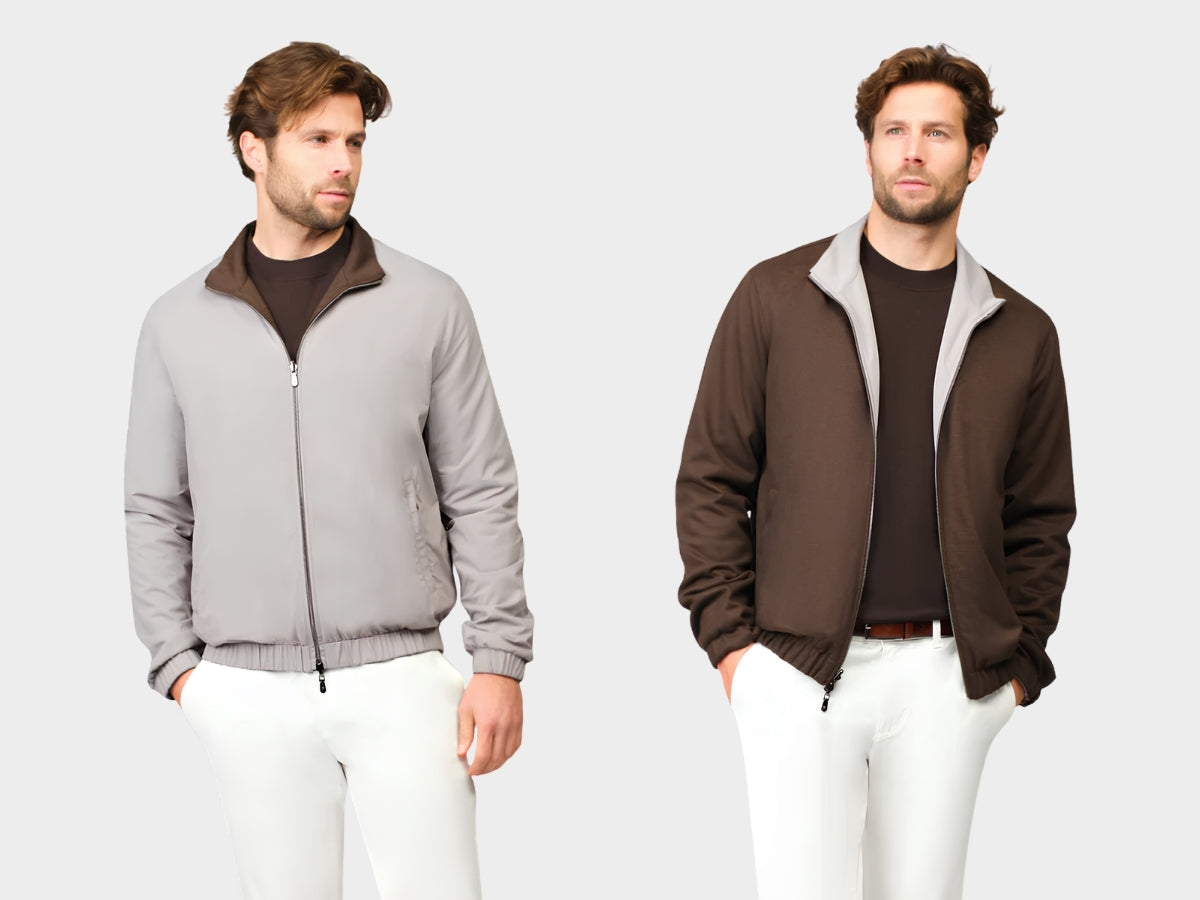
Why Premium Menswear in Netherlands Is Worth the Extra Cost
Ask any well-dressed man walking through the Nine Streets in Amsterdam or along the Witte de Withstraat in Rotterdam, and he will likely tell you the same thing. His best pieces were never his cheapest. Premium menswear in Netherlands is worth the extra cost because it delivers superior fabrics, precise tailoring, longer garment life, and a quiet confidence that fast fashion simply cannot match. For Dutch men who value substance over trend, spending more upfront often means spending far less over a lifetime.
At Pirloni, we have spent years watching how our customers think about clothing. The conversation has shifted. Men are no longer asking how cheap they can get something. They are asking how long it will last and how it will make them feel. This guide unpacks the real reasons why luxury mens clothing in Netherlands commands a higher price, and why that price tag is more honest than it looks.
What Actually Defines High-Quality Menswear?
High-quality menswear is defined by three things working together: the raw material, the construction, and the finishing. Remove any one of them, and the garment falls apart, sometimes literally.
The Fabric Is the Foundation
Premium fabric clothing for men almost always starts with a better fibre source. Think Super 120s or Super 150s wool from mills like Loro Piana or Vitale Barberis Canonico, long-staple Egyptian cotton woven to 140+ thread counts, or full-grain Italian leather aged for months rather than days. These materials drape better, breathe better, and wear in instead of wearing out.
Fast fashion, by contrast, leans heavily on short-staple blends, polyester-heavy mixes, and bonded leathers. The difference is obvious within a season.
Back Story You Cannot See
The stitching you see on the outside of a jacket is a small fraction of the work. A proper suit jacket has a fully canvassed interior, which is a layer of horsehair and wool stitched (not glued) between the outer fabric and the lining. This is what gives a premium jacket its shape, its ability to mould to your body over time, and its resistance to bubbling after dry cleaning.
Fused jackets, where the interior is glued, are faster and cheaper to produce. They also fail, usually within 18 to 24 months.
Finishing Touches
Hand-rolled collar points. Milanese buttonholes. Working surgeon's cuffs on suit sleeves. Horn buttons instead of plastic. Pick-stitching along the lapel. These are not decorative flourishes. They are signals that a real pair of hands spent real time on the garment.
Why Does Premium Menswear Cost More?
Premium menswear is expensive for reasons that are easy to defend once you see them up close.
-
Material cost. A metre of Super 150s wool can cost 5 to 8 times more than a metre of wool-polyester blend. Full-grain leather costs 3 to 4 times more than corrected-grain.
-
Labour hours. A hand-finished shirt takes roughly 4 to 6 hours of skilled labour. A machine-stitched mass-market shirt takes under 15 minutes.
-
Ethical sourcing. High quality menswear brands increasingly audit their supply chains, pay living wages, and use mills with responsible environmental standards. These costs are real.
-
Smaller production runs. Premium brands produce in the hundreds or low thousands, not the millions. There is no economy of scale to hide behind.
-
Quality control. Rejecting flawed pieces instead of shipping them costs money. Fast fashion simply ships them.
When you pay more for premium, you are not paying for a logo. You are paying for fibres, time, and standards.
Why Smart Dutch Men Buy Once and Wear Forever
Mens fashion in Netherlands has a distinct character. It is not loud. It is not trend-chasing. It is considered, practical, and quietly confident. This cultural preference, visible from Amsterdam to Utrecht to Eindhoven, aligns almost perfectly with what premium menswear actually delivers.
The Climate Rewards Good Fabric
The Netherlands gets rain on roughly 130 to 140 days a year. Wind off the North Sea is relentless in Rotterdam and The Hague. Temperatures swing from near-freezing winters to surprisingly warm summer afternoons.
Cheap synthetic blends do not cope well with this. They overheat in summer, offer no insulation in winter, and wrinkle into sad shapes the moment rain touches them. A high-twist wool suit, a well-made cotton trench, or a proper cashmere-blend overcoat handles Dutch weather with composure. This is not a marketing line. It is what the fibres physically do.
Dutch Style Favours Longevity
Dutch men tend to build wardrobes rather than refresh them. A tailored navy blazer, a pair of brown leather derbies, a charcoal overcoat. These are pieces worn for a decade or more, paired and repaired rather than replaced. Long lasting mens clothing is not a luxury in this context. It is the default expectation.
Sustainability Matters Here
The Netherlands ranks among the most sustainability-aware markets in Europe. Dutch consumers are increasingly uncomfortable with the environmental cost of fast fashion, including the water consumption, the textile waste, and the microplastic shedding. Premium menswear, with its longer garment life and better materials, is quietly one of the more sustainable clothing choices available.
Cost-Per-Wear: The Only Honest Number
The sticker price is misleading. The real number that matters is cost-per-wear, which reflects the long-term value a garment delivers across the full time you own it.
A fast fashion blazer worn for a short period often ends up costing more per wear due to its limited lifespan. It loses shape quickly, pills within a season, and falls out of rotation long before it has earned its place in your wardrobe. A premium blazer, worn consistently over many years, delivers far better value per wear while maintaining its structure and appearance. It also holds resale value on platforms like Vinted or United Wardrobe, whereas fast fashion rarely has a resale market at all.
Expensive clothing for men is not actually expensive once you think in terms of years, not receipts.
How to Choose Premium Menswear Without Overpaying
Not every high price tag signals quality. Here is how to tell the difference.
Check the fabric composition. Turn the garment inside out. Look for 100% natural fibres like wool, cotton, linen, silk, or cashmere, or intentional high-performance blends. Be wary of anything heavy in polyester or acrylic at a premium price point.
Feel the weight and drape. Premium fabric has substance. Hold a lapel between your fingers. It should feel dense but flexible, not papery or stiff.
Inspect the stitching. Straight, tight, consistent stitches. No loose threads. Pattern matching at seams, such as stripes lining up across shoulders or checks aligning at pockets, is a strong quality indicator.
Look at the buttons and hardware. Real horn, mother-of-pearl, or corozo buttons. Metal zips, not plastic. These small details scale.
Understand the brand. The best high quality menswear brands are transparent about where their fabric comes from, where the garment was made, and who made it. Vague "imported materials" language is a red flag.
Try it on and move. A premium garment should feel like it fits your body. If you have to stand still to look good in it, it is not the right piece, regardless of price.
Does Premium Clothing Actually Last Longer?
Yes, and the gap is larger than most people realise.
Independent wear-testing by textile researchers at institutions such as Wageningen University has consistently shown that garment longevity correlates directly with fibre quality, construction type, and finish. A fully canvassed suit jacket can remain structurally sound through 100+ dry cleaning cycles. A fused jacket typically starts delaminating after 20 to 30.
Shoes tell the same story. A Goodyear-welted leather shoe from a proper maker can be resoled 3 to 5 times over a 15 to 20 year lifespan. A cemented-construction shoe usually cannot be resoled at all and is landfill-bound within 18 months.
The premium you pay upfront is, functionally, prepaid years of wear.
The Pirloni Approach
Pirloni was built around a simple idea. Men in the Netherlands deserve clothing that respects their intelligence. That means fabrics sourced from mills with real reputations, construction that holds up, and designs that will still look right in 2035.
We do not chase seasons. We do not produce in volumes we cannot quality-check. We make pieces intended to be worn, remembered, and eventually passed down. That is what premium should mean, and it is the standard we hold ourselves to with every garment that carries our name.
Final Thoughts
Premium menswear in the Netherlands is not a flex. It is a calculation, one that favours the man who plans to be well-dressed five years from now, not just this Saturday evening. Better fabrics survive Dutch weather. Better construction survives Dutch winters. Better design survives Dutch taste.
If you are tired of replacing clothes you never really liked in the first place, it may be time to rethink the equation. Explore the Pirloni collection and discover what clothing feels like when it is built to last, built to fit, and built with the quiet confidence that defines the best of Dutch menswear.
FAQ's
Why is premium menswear expensive?
Is premium clothing worth the cost?
What defines high-quality menswear?
Does premium clothing last longer?
How do I choose premium menswear?
Where can I find premium menswear in the Netherlands?
Last updated: