Guide des chemises pour homme : types, fit et style pour un vestiaire moderne
Une grande chemise est l’un des luxes les plus discrets du vestiaire masculin. Elle ne cherche pas à se faire remarquer, ne poursuit pas les tendances et n’a pas besoin de logo pour affirmer sa valeur. Pourtant, la bonne chemise peut transformer la chute d’une veste, la lecture d’un pantalon et, très simplement, la manière dont un homme se tient tout au long de la journée. C’est pourquoi nous avons conçu ce guide des chemises pour homme : une référence claire et contemporaine pour ceux qui souhaitent bien s’habiller, sans trop y penser.
Chez Pirloni, nous consacrons beaucoup de temps à étudier la façon dont les chemises bougent, tombent et vieillissent. Dans ce guide, nous vous présentons les styles de chemises essentiels, les coupes qui mettent en valeur différentes morphologies, les étoffes qui comptent et les détails de styling qui distinguent une allure soignée d’une tenue ordinaire.
Que vous construisiez peu à peu une garde-robe à partir de rien ou que vous affiniez celle que vous possédez déjà, c’est la seule ressource que vous aurez besoin de garder en favoris.
Pourquoi la chemise est la colonne vertébrale du menswear
Avant d’aborder les types de chemises qu’un homme devrait connaître, il est utile de comprendre pourquoi la chemise occupe une place aussi centrale dans le menswear classique et contemporain.
Parmi les pièces visibles, la chemise est celle qui se porte au plus près de la peau. Elle encadre le visage, dessine la silhouette du buste et sert de couche de liaison avec le reste de la tenue. Le pantalon et les chaussures ancrent une silhouette, mais c’est la chemise qui donne le ton. Si elle est mal choisie, même un Blazer bien coupé paraît déséquilibré. Si elle est juste, un simple jean prend soudain une allure plus réfléchie.
Le menswear européen, en particulier, a toujours accordé une confiance immense à la chemise. Du tailoring milanais au minimalisme néerlandais, la philosophie reste la même : investir dans moins de chemises, mais de meilleure qualité, et les porter avec intention.
Les types de chemises essentiels dans un vestiaire masculin
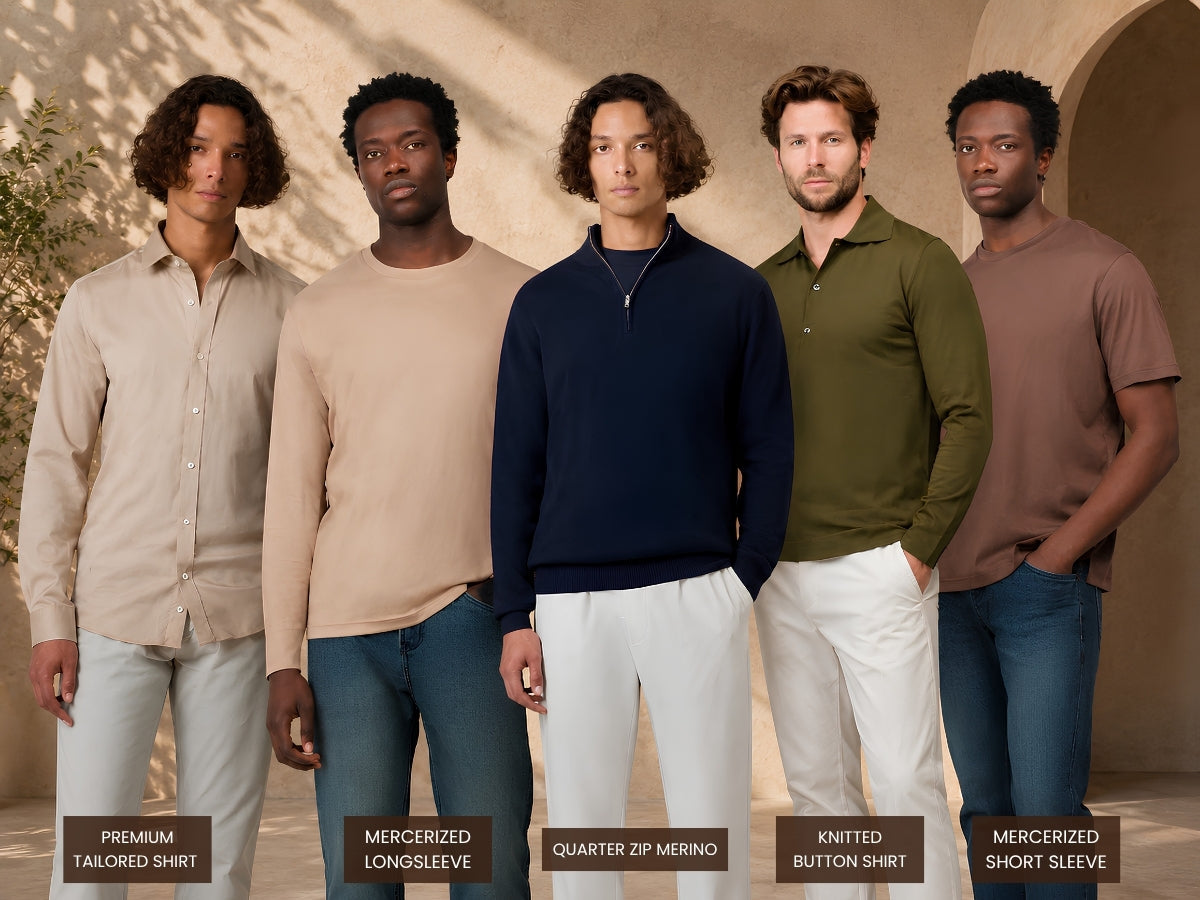
Commençons par la base. Voici les styles de chemises que tout homme moderne devrait connaître, classés globalement du plus formel au plus décontracté.
1. La chemise habillée
La chemise habillée est la pierre angulaire du vestiaire formel. Traditionnellement blanche ou bleu pâle, elle se distingue par un col structuré, une patte de boutonnage nette et des poignets simples ou mousquetaires. C’est la chemise que vous portez sous un costume, à une réunion professionnelle ou lors d’une soirée formelle.
Une chemise habillée bien conçue se reconnaît à des signes de qualité discrets : un empiècement dos en deux parties pour une meilleure aisance aux épaules, des boutons en nacre, une couture à aiguille unique et un pan légèrement plus long pour rester bien en place dans le pantalon. Ce sont ces détails que Pirloni travaille avec attention dans notre ligne de chemises formelles.
2. La chemise Oxford
La chemise Oxford est la pièce de fond du vestiaire smart-casual. Elle doit son nom à son tissu à armure nattée et trouve naturellement sa place entre le formel et le casual. L’Oxford classique possède un col button-down, une surface légèrement texturée et assez de tenue pour rester nette sans cravate.
Portez-la avec un Chino et des mocassins au bureau, ou avec un denim brut et des sneakers blanches le week-end. C’est la chemise la plus polyvalente du menswear moderne.
3. La chemise casual button-down
Légèrement plus souple qu’une Oxford, la chemise casual button-down est confectionnée en coton léger, en popeline ou en twill. Elle se décline souvent en motifs : rayures, carreaux, micro-imprimés. Le col est généralement non thermocollé ou légèrement structuré, pour un tombé plus décontracté.
C’est votre chemise du quotidien. Associez-la à un Chino en été, portez-la sous une maille en hiver, ou ouverte sur un t-shirt uni.
4. La chemise en lin
Peu de matières traversent les fortes chaleurs comme le lin. Respirante, légère et d’une élégance immédiate, la chemise en lin est faite pour les voyages, les vacances et les longs déjeuners méditerranéens. Elle se froisse, oui, mais ces plis font partie de son charme.
Choisissez le lin dans des tons neutres comme le blanc, sand, sauge ou bleu doux. Portez-la sortie avec un pantalon en lin, ou rentrée dans un Shorts Tailored. Une chemise en lin Pirloni, par exemple, est coupée avec un volume légèrement Relaxed fit, afin d’effleurer le corps sans le contraindre.
5. L’Overshirt (Shacket)
À mi-chemin entre une chemise et une veste légère, l’Overshirt est devenue un essentiel du menswear moderne. Généralement confectionnée dans un coton plus épais, de la laine ou du velours côtelé, elle se porte sur un t-shirt ou une maille fine.
L’Overshirt se révèle particulièrement juste à la mi-saison, lorsqu’un manteau serait de trop, mais qu’une seule couche ne suffit pas. C’est l’un des styles de chemise les plus sous-estimés du vestiaire contemporain.
6. Le Polo Shirt
Techniquement une chemise en maille, le Polo mérite sa place dans tout guide consacré aux chemises. Né sur les courts de tennis, puis rapidement adopté par le golf et la culture Ivy League, le Polo fait naturellement le lien entre décontraction et élégance. Aujourd’hui, le Polo allongé, légèrement plus ample, a remplacé la coupe ajustée et sportive du début des années 2000.
Un Polo en merino ou en coton piqué, porté sous un Blazer non structuré, est l’un des looks d’été les plus élégants qu’un homme puisse composer.
7. La chemise en denim ou chambray
Robuste, authentique et infiniment facile à porter, la chemise en denim est un classique du vestiaire. Le chambray en est le cousin plus léger et plus souple. Tous deux sont parfaits pour le layering et s’accordent avec tout, du denim brut au pantalon Tailored en laine.
Pour une interprétation plus raffinée, choisissez un indigo plus foncé, avec un délavage minimal.
8. La chemise en flanelle
Pour les mois plus froids, la flanelle apporte chaleur, texture et une allure légèrement outdoor. Les flanelles de coton brossé à carreaux discrets fonctionnent parfaitement avec du denim, un pantalon en laine ou sous un overshirt.
9. La chemise à col cubain
Également appelée chemise à col camp, la chemise à col cubain présente un revers souple, ouvert et cranté, qui repose à plat sur la poitrine. Elle se porte déboutonnée en haut, souvent sortie du pantalon. Son charme vintage, légèrement rétro, en a fait à nouveau un favori de l’été.
Comprendre l’anatomie d’une chemise
Une chemise n’est pas seulement un tissu et des boutons. C’est un petit objet d’architecture, dont les détails définissent discrètement l’allure sur le corps.
Cols
Le col encadre le visage et donne le ton de la chemise.
-
Col italien : Classique, moderne, adapté à la plupart des nœuds de cravate et très élégant porté ouvert. Un choix sûr pour les registres formels et smart casual.
-
Col pointu : Plus étroit, plus traditionnel, idéal pour les visages fins et les cravates plus étroites.
-
Col boutonné : Décontracté et d’origine américaine. Idéal pour les Oxfords et les chemises plus souples.
-
Col cutaway : Large ouverture, très européenne. S’accorde parfaitement avec un nœud de cravate généreux.
-
Col officier : Sans col, minimaliste, excellent sous la knitwear.
Poignets
-
Poignet simple : Le standard, fermé par un ou deux boutons.
-
Poignet mousquetaire : Replié et fermé par des boutons de manchette. Réservé aux occasions formelles.
-
Poignet convertible : Se porte avec des boutons ou des boutons de manchette.
Gorge
La gorge est la bande de tissu située sur le devant. Une gorge classique présente des surpiqûres visibles, tandis qu’une gorge française est épurée et légèrement plus élégante. Les gorges cachées, souvent utilisées sur les chemises de smoking, dissimulent entièrement les boutons.
Bas
Un bas arrondi est pensé pour être rentré dans le pantalon. Un bas droit indique qu’une chemise est destinée à être portée sortie. Un détail discret, aux réelles implications de style.
Le guide des Fits de chemise Pirloni
Le Fit est le point sur lequel la plupart des hommes se trompent. Un tissu premium ne sauvera pas une chemise mal coupée, tandis qu’une étoffe de milieu de gamme paraîtra raffinée si les proportions sont justes.
Trois Fits essentiels
-
Slim fit : Se resserre au niveau de la poitrine et de la taille. Idéale pour les silhouettes plus fines ou athlétiques.
-
Coupe classique (regular) : Plus d’aisance sur le buste. Confortable et tolérante.
-
Coupe relaxed ou moderne : Une coupe contemporaine, située entre slim et classique. Elle s’impose de plus en plus comme le standard du vestiaire masculin moderne.
Mesures clés à vérifier
Lors de l’essayage d’une chemise, concentrez-vous sur ces zones :
-
Épaules : La couture doit tomber exactement à l’extrémité de votre épaule. C’est la zone la plus difficile à retoucher, il faut donc la choisir juste dès l’achat.
-
Poitrine : Vous devez pouvoir pincer environ trois à quatre centimètres de tissu de chaque côté. Plus serré, l’effet paraît contraint ; plus ample, il manque de tenue.
-
Longueur de manche : Le poignet doit arriver à la base du pouce lorsque les bras sont relâchés. Avec une veste, environ un à deux centimètres de poignet de chemise doivent être visibles.
-
Longueur de chemise : Assez longue pour rester rentrée lorsque vous levez les bras, sans être longue au point de créer des plis autour du pantalon.
-
Col : Vous devez pouvoir glisser confortablement un doigt entre votre cou et le col boutonné.
Un lien interne pertinent ici mènerait vers un [guide des coupes de chemises pour homme] plus détaillé, où les lecteurs peuvent approfondir les mesures et le tailoring.
Tissus de chemise : ce qui compte vraiment
Le choix du tissu influence tout : le tombé de la chemise, son toucher, la façon dont elle vieillit.
Coton
Le tissu de référence. Doux, respirant, facile d’entretien. Privilégiez les tissages de qualité supérieure comme la popeline (lisse et nette), l’Oxford (texturé), le twill (armure diagonale subtile au lustre doux) et l’end-on-end (un fin tissage bicolore qui apporte de la profondeur).
Lin
Frais, léger, parfait pour les climats chauds et les voyages. Les plis lui sont propres et font partie de son caractère.
Mélanges coton-lin
Un favori contemporain. Ils conservent la respirabilité du lin tout en réduisant le froissement.
Tissus performance
Les mélanges techniques plus récents associent le coton à des fibres stretch pour une meilleure reprise de forme, une bonne gestion de l’humidité et une grande praticité en voyage. Excellents pour les hommes qui enchaînent réunions, vols et dîners dans la même journée.
Flanelle et coton brossé
Pour les mois les plus froids. Les surfaces brossées apportent chaleur et douceur.
Lorsque vous choisissez une chemise Pirloni, le tissu est toujours le point de départ, car il détermine la façon dont le vêtement vous accompagnera au fil du temps.
Styler les chemises pour homme selon l’occasion
Passons maintenant à la partie la plus intéressante : tout assembler. Voici comment envisager les styles de chemises selon les différents contextes.
Le bureau
Pour la plupart des bureaux contemporains, une chemise Oxford ou popeline impeccable, blanche, bleu clair ou à rayure subtile, est idéale. Portez-la avec un pantalon Tailored, des Derbies ou des loafers en cuir, et une ceinture structurée. Si votre environnement de travail est plus formel, ajoutez un Blazer navy ou gris.
Réunions d’affaires et événements formels
Restez sur une chemise habillée classique, blanche ou bleu pâle, avec un col cutaway. Gardez la cravate sobre : navy, bordeaux ou motifs discrets. Les boutons de manchette, si vous en portez, doivent rester understated.
Mariages
Pour les mariages en journée, les chemises bleu clair ou pastel avec des costumes en lin ont une allure actuelle et élégante. Pour les mariages en soirée, revenez au blanc avec un costume plus sombre.
Rendez-vous
Une chemise noire ou navy profond, à la coupe légèrement Relaxed, portée avec un pantalon sombre et des accessoires minimalistes. Ici, la confiance vient de la retenue.
Week-end et tenue casual
C’est ici que la garde-robe s’ouvre véritablement. Une chemise en chambray avec un denim brut. Une chemise en lin avec un Shorts Tailored. Une flanelle portée sous une Overshirt. La règle est simple : équilibrer une pièce structurée avec une pièce plus Relaxed.
Voyage
Choisissez un coton résistant au froissement ou un mélange coton-lin dans des couleurs neutres. Deux chemises bien choisies peuvent suffire pour tout un week-end.
Prendre soin de vos chemises
Même les meilleures chemises pour homme ont besoin d’un entretien adapté pour durer.
-
Lavez les chemises en coton à 30 degrés Celsius avec une lessive douce.
-
Évitez le sèche-linge lorsque c’est possible. Le séchage à l’air libre préserve le tissu.
-
Repassez-les lorsqu’elles sont encore légèrement humides pour un fini plus net.
-
Suspendez vos chemises sur des cintres en bois galbés afin de préserver la ligne d’épaule.
-
Alternez vos chemises plutôt que de solliciter toujours une ou deux favorites.
Le lin et les tissus techniques peuvent avoir des exigences différentes. Vérifiez donc toujours l’étiquette d’entretien.
Dernières réflexions
Bien s’habiller ne demande pas une garde-robe étendue. Cela demande de la compréhension. Dès que vous connaissez les types de chemises qui existent, les coupes qui vous mettent en valeur et les tissus adaptés à votre quotidien, s’habiller devient plus calme, plus rapide et bien plus satisfaisant.
Telle est la philosophie derrière chaque chemise Pirloni : assez classique pour durer, assez moderne pour rester pertinente, et pensée dans chaque détail afin que celui qui la porte n’ait pas à hésiter. Utilisez ce guide des chemises pour homme comme point de repère, revenez-y dès que vous avez un doute, et gardez à l’esprit que le style juste se construit discrètement, une chemise bien faite à la fois.
FAQ's
What are the main types of shirts for men?
How should a men's shirt fit properly?
What is the difference between an Oxford shirt and a dress shirt?
Which shirt fabric is best for daily wear?
How many shirts should a man own?
Can a slim man wear a relaxed-fit shirt?
How do I keep my shirts looking new for longer?
Dernière mise à jour: