Qu’est-ce qu’un Bomber Jacket ? Histoire, styles et looks modernes
Le Bomber Jacket fait partie des rares vêtements restés au premier plan du style pendant près d’un siècle. Des terrains d’aviation militaires des années 1910 aux défilés de 2026, cette jacket courte à poignets côtelés ne cesse de se réinventer sans perdre son identité.
Mais qu’est exactement un Bomber Jacket, et pourquoi est-il devenu un essentiel du vestiaire masculin et féminin dans le monde entier ? Ce guide signé Pirloni vous présente l’histoire du Bomber Jacket, son évolution, les principaux styles que vous verrez aujourd’hui, et la façon de le porter en 2026.
Cet article s’adresse à toute personne curieuse de connaître l’histoire du Bomber, aux clients qui souhaitent comprendre ce qui fait vraiment un Bomber, et aux passionnés de style qui veulent ajouter cette pièce intemporelle à leur garde-robe.
Qu’est-ce qu’un Bomber Jacket ?
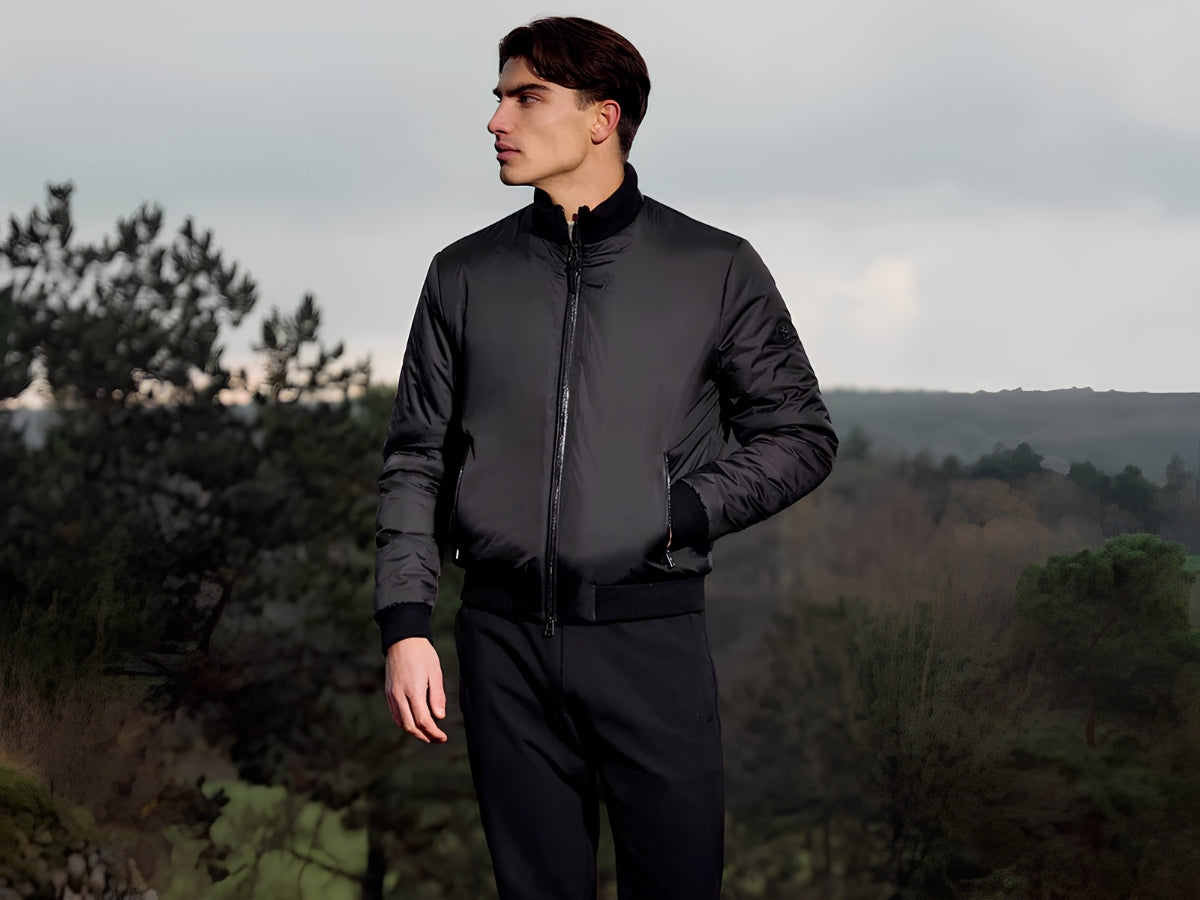
Un Bomber Jacket est une jacket courte, longueur taille, dotée d’une ceinture ajustée en bord-côte, de poignets côtelés et, le plus souvent, d’un col côtelé. Il se ferme par zip sur le devant, tombe sur la hanche et est conçu pour garder le haut du corps au chaud sans limiter les mouvements des bras.
Les caractéristiques qui définissent un Bomber Jacket sont :
- Une coupe cropped, longueur taille, qui tombe au niveau de la ceinture
- Poignets, bas et, souvent, col en bord-côte élastique
- Une fermeture zippée sur toute la longueur devant
- Fit ample, façon blouson, au niveau du torse
- Poches poitrine et poches sur les manches, fonctionnelles ou décoratives
Ce qui distingue un Bomber d’une varsity jacket, d’une Harrington ou d’une coach jacket, c’est l’association de tous ces éléments : les finitions côtelées et la silhouette boxy, légèrement blousante. Si vous vous demandez encore si un Bomber est fait pour vous, notre guide complet pour choisir le Bomber Jacket parfait détaille le fit, la matière et le styling.
Histoire du Bomber Jacket : du cockpit au vestiaire
L’origine du Bomber Jacket remonte à l’aviation militaire, avec une histoire plus fascinante qu’on ne l’imagine souvent.
Les années 1910 : les premières flight jackets
Pendant la Première Guerre mondiale, les pilotes militaires volaient dans des cockpits ouverts à haute altitude. Les températures chutaient à des niveaux extrêmes, et les uniformes standards ne suffisaient pas. En 1917, l’U.S. Army Aviation Clothing Board créa la première flight jacket en cuir : lourde, doublée de fourrure et pensée uniquement pour la survie.
Ces premières jackets n’étaient pas encore appelées « bombers ». Il s’agissait simplement de flight jackets, confectionnées en cuir de cheval ou en peau de phoque, avec une doublure en shearling.
Années 1930 et 1940 : l’A-2 et le B-15
En 1931, l’U.S. Army Air Corps introduit la veste de vol A-2 en cuir, qui devient la dotation standard des pilotes américains pendant la Seconde Guerre mondiale. Plus courte que ses prédécesseurs, elle possède des poignets et une ceinture en knit, ainsi qu’un col à boutons-pression. Les lignes du bomber moderne commencent à se dessiner.
Dans les années 1940, le B-15 ajoute un col en fourrure et une poche utilitaire sur la manche gauche. Les équipages de bombardiers portaient ces vestes lors de missions au-dessus de l’Europe et du Pacifique, et le terme « bomber jacket » commence alors à entrer dans le langage courant.
Années 1950 : le MA-1 change tout
Le moment le plus emblématique de l’histoire du bomber jacket survient en 1958, lorsque l’armée américaine introduit le MA-1. Il remplace le lourd col en fourrure par un col en knit côtelé, afin que les pilotes puissent porter leur harnais de parachute sans que le col ne s’entasse, et abandonne le cuir au profit du nylon. La célèbre doublure orange réversible a été ajoutée pour qu’un pilote abattu puisse retourner la veste et l’utiliser comme signal de secours.
Le MA-1 est la veste que la plupart des gens imaginent lorsqu’ils entendent le mot « bomber ». Son design a très peu changé en 70 ans, et sa silhouette constitue la base de pièces modernes comme la Pirloni Classic Bomber Jacket, qui conserve la coupe Heritage tout en adoptant des matières plus nettes et plus légères pour le quotidien.
Années 1970 et 1980 : le Bomber passe au vestiaire civil
Les vétérans de la guerre du Vietnam ont rapporté leurs bombers chez eux, et la veste est passée dans la mode civile. Punks, skinheads, artistes hip-hop et Hollywood l’ont tous adoptée. Des films comme Top Gun (1986) ont fait du G-1 bomber en cuir une icône culturelle du jour au lendemain.
Des années 1990 à aujourd’hui : la mode prend le relais
Des designers comme Alpha Industries, Schott NYC, puis des maisons de luxe telles que Saint Laurent et Acne Studios ont réinterprété le bomber en suede, satin, soie brodée et matières techniques. Dans les années 2010, le bomber était devenu unisexe, transsaisonnier et l’une des vestes les plus polyvalentes du vestiaire moderne.
Principaux styles de Bomber Jacket à connaître aujourd’hui
Tous les bombers ne se ressemblent pas. Voici les styles que vous rencontrerez le plus souvent lors de vos achats :
1. MA-1 Bomber (Le Classic)
Le descendant du modèle militaire original de 1958. Coque en nylon, finitions côtelées, coupe légèrement Boxy et souvent un intérieur doublé orange. La silhouette de bomber la plus reconnaissable, à l’origine du Pirloni Classic Bomber Jacket.
2. Flight Bomber / Style A-2
Confectionné en cuir, structuré, avec un col façon chemise et une fermeture à boutons-pression. Plus lourd, avec une allure plus vintage. Idéal par temps frais et pour des tenues plus habillées.
3. Varsity Bomber
Un croisement entre une veste de baseball et un bomber. Corps en laine, manches en cuir, fermeture à boutons-pression, souvent avec lettres ou patches sur la poitrine. Sportif et jeune.
4. Satin / Souvenir Bomber
Tissu lisse et brillant, souvent en satin ou en satinette, généralement avec des broderies au dos (dragons, tigres, motifs floraux). Ancré dans les souvenir jackets japonaises d’après-guerre (sukajan).
5. Bomber daim & cuir
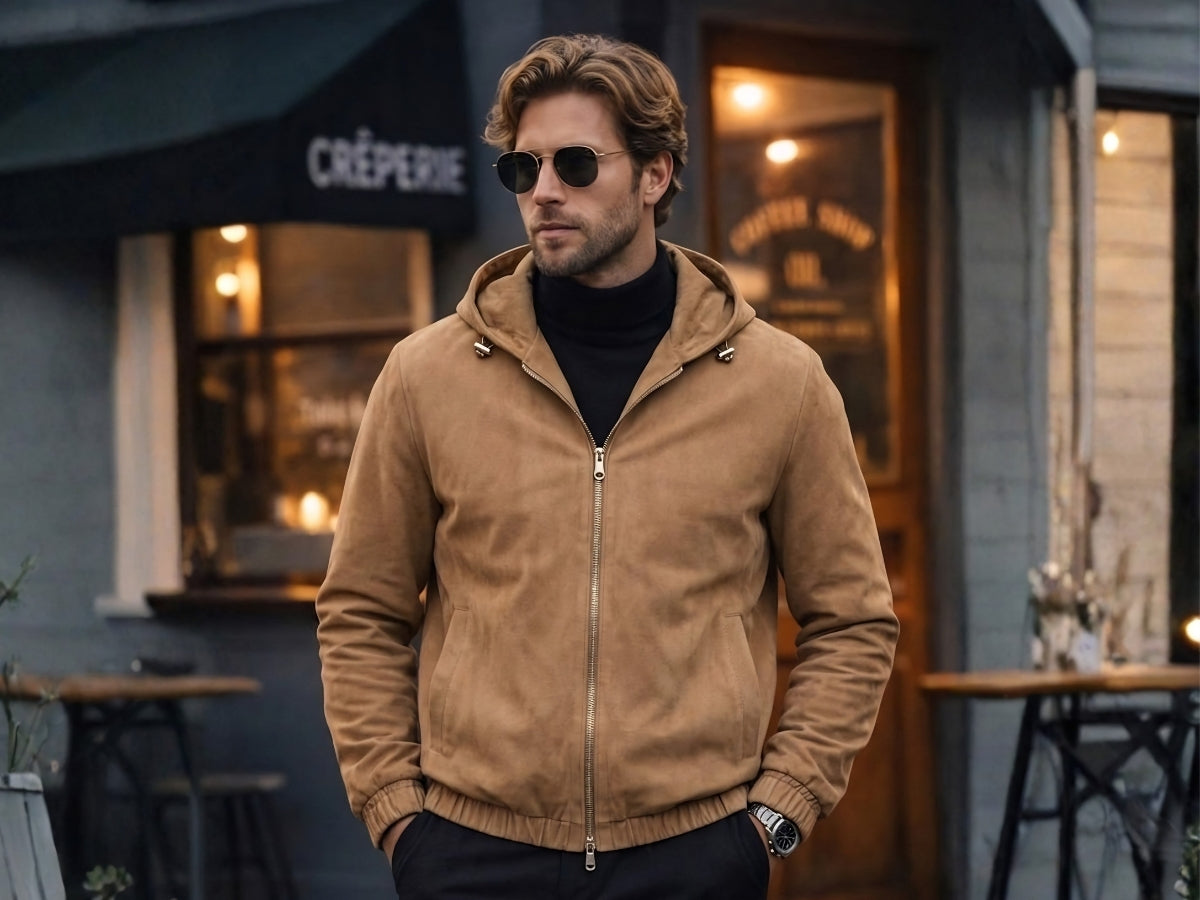
Une interprétation premium, plus mode. Le daim souple ou le cuir supple remplace le nylon. Il s’associe parfaitement aux tenues smart-casual.
6. Tech / Modern Bomber
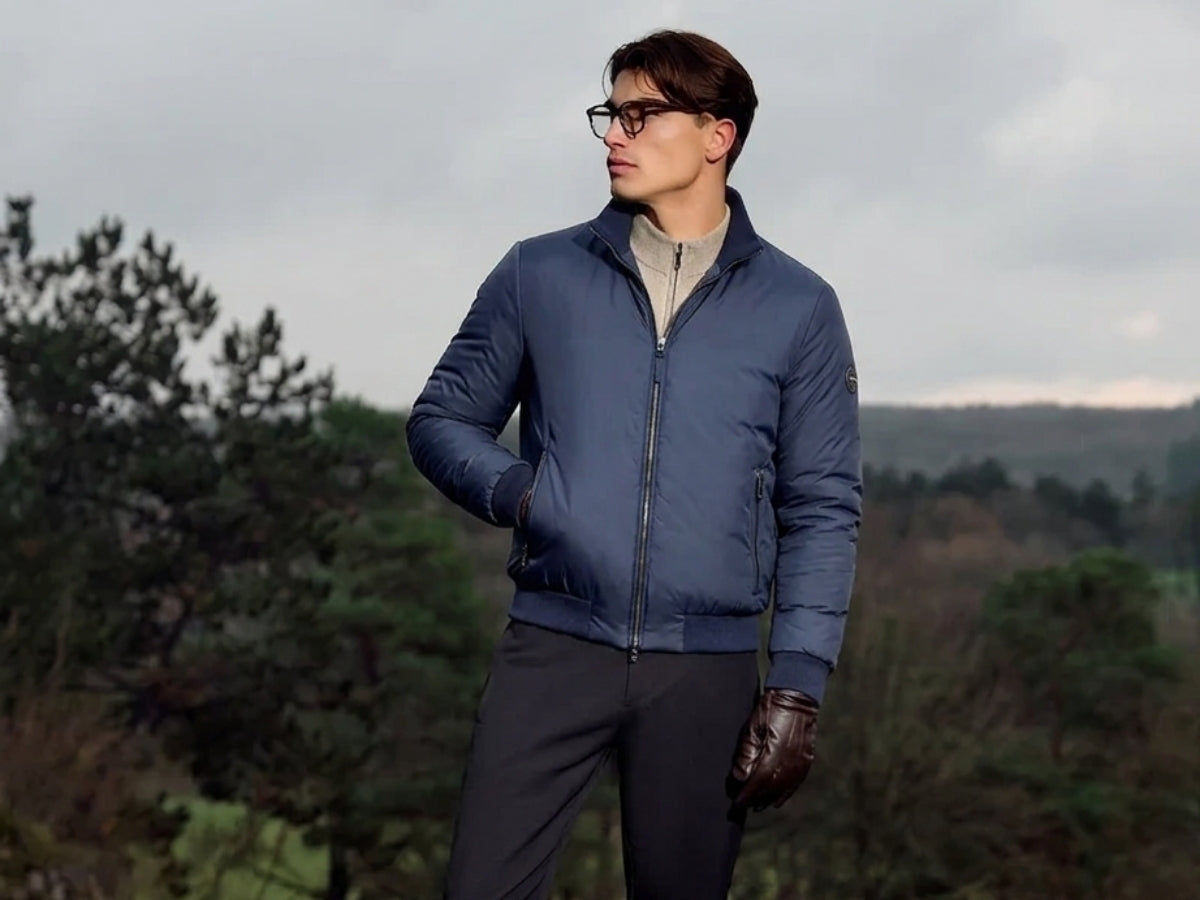
Conçu dans des tissus techniques, softshell, ripstop ou nylon déperlant. Des lignes plus nettes, un branding minimal, souvent vu chez des marques contemporaines comme Pirloni.
Looks Modern Bomber Jacket pour 2026
Connaître l’histoire du bomber jacket est une chose. Bien le porter en est une autre. Voici les looks qui dominent les vestiaires en ce moment :
Le Look Smart-Casual : Un MA-1 noir ou olive sur un tee blanc, avec un chino Slim fit et des sneakers blanches épurées. Sans effort, il fonctionne dans presque tous les contextes casual.
Le Look Streetwear Layered : Un bomber en satin ou souvenir porté sur un hoodie, avec un pantalon cargo et des sneakers épaisses. Il apporte du relief et une touche plus affirmée.
Le Look Minimaliste : Un bomber technique aux tons neutres, associé à un pantalon fuselé et des mocassins en cuir. Discret, raffiné, résolument 2026.
Le look revival vintage : un flight bomber en cuir avec un raw denim et des Chelsea boots. Il évoque l’Americana classique dans une coupe moderne.
Le look élevé : un bomber en daim sur un knit fin, un pantalon en laine et des Derby. La preuve qu’un bomber peut parfaitement convenir à un dîner ou à une soirée.
Pourquoi le Bomber Jacket est un essentiel du vestiaire
Si les bombers traversent près de 110 ans, c’est pour trois raisons :
- Polyvalence, il fonctionne avec des tenues casual, smart-casual et même certaines silhouettes semi-formelles.
- Silhouette flatteuse, la taille Cropped et le bas côtelé mettent en valeur presque toutes les morphologies.
- Porté toute l’année, les versions légères conviennent au printemps et à l’automne, tandis que les bombers doublés en shearling ou isolants affrontent l’hiver.
Que vous construisiez une capsule wardrobe minimaliste ou que vous enrichissiez un vestiaire plus mode, un bomber bien choisi trouve naturellement sa place dans la rotation. Si vous êtes prêt à choisir le vôtre mais ne savez pas par où commencer, notre guide du bomber parfait détaille les bonnes décisions à prendre avant l’achat.
Dernières réflexions
Le bomber jacket prouve que les grands designs traversent le temps. Né en 1917 comme équipement fonctionnel pour les pilotes de chasse, il est devenu l’une des vestes les plus universellement appréciées de la mode contemporaine. Comprendre l’origine du bomber jacket et son évolution permet de mieux saisir pourquoi il reste si juste aujourd’hui, et pourquoi il mérite une place permanente dans votre vestiaire.
Chez Pirloni, notre vision du bomber associe l’héritage du modèle original à des matières modernes, des coupes plus nettes et une polyvalence pensée pour le quotidien. Le Pirloni Classic Bomber Jacket est notre interprétation de la silhouette MA-1, conçue pour être portée chaque jour sans perdre son esprit Heritage.
Prêt à trouver votre bomber ? Commencez par notre guide complet pour choisir le bomber parfait, puis explorez la collection afin de trouver celui qui correspond à votre histoire.
FAQ's
What is a bomber jacket made of?
Who invented the bomber jacket?
What is the difference between a bomber jacket and a varsity jacket?
Are bomber jackets still in style in 2026?
Can both men and women wear bomber jackets?
Dernière mise à jour: